


Crepe Bandage Vs Elastic Bandage Key Differences And When To Use Each
Views: 0 Author: Site Editor Publish Time: 2026-03-17 Origin: Site


Bandages look simple, but choosing the wrong type can lead to poor support, uncomfortable pressure, or a wrap that slips after a few minutes of movement. In clinics, sports settings, workplaces, and home first-aid kits, two terms are often used interchangeably: crepe bandage and elastic bandage. Yet they are not the same, and understanding the differences helps you use the right product for the right purpose. Whether you are stabilizing a sprained ankle, securing a dressing, controlling swelling, or providing light support during recovery, the bandage you select directly impacts comfort, safety, and effectiveness.
From our perspective at Nantong Glory Medical Material Co., Ltd., most user confusion comes from two issues: the naming overlap and the wide variation in stretch and construction between products on the market. A “crepe bandage” is often chosen for gentle support and dressing retention, while an “elastic bandage” is typically selected when higher stretch and stronger compression are required. However, specific design and material choices can change performance significantly.
What Is a Crepe Bandage
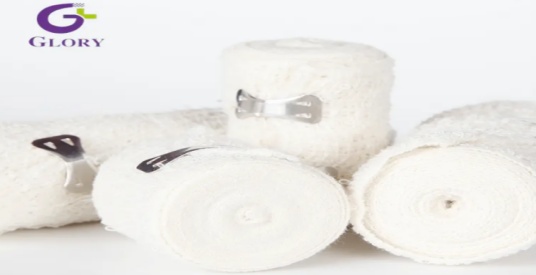
A crepe bandage is a woven bandage with a crinkled (creped) texture. The crepe weave gives it mild elasticity and grip, helping it stay in place without slipping easily. Crepe bandages are often made from cotton or cotton blends and are commonly used for:
holding dressings in place
providing light support to soft tissue
applying gentle compression
reducing mild swelling
Crepe bandages are typically chosen when you want a stable wrap with moderate stretch and good breathability.
What Is an Elastic Bandage
An elastic bandage (often called an elastic wrap) is designed to stretch more than a traditional crepe bandage. It usually contains elastic yarns that provide higher extensibility and stronger rebound, making it suitable for:
stronger compression support
managing moderate swelling
supporting sprains and strains
sports protection and recovery wraps
Elastic bandages are widely used in sports medicine and rehabilitation because they can deliver controlled compression while allowing movement.
Crepe Bandage vs Elastic Bandage Key Differences
The most useful way to compare these products is by how they behave during wrapping and wear.
Feature | Crepe Bandage | Elastic Bandage |
Stretch level | mild to moderate | moderate to high |
Compression strength | gentle | stronger and more adjustable |
Best for | dressing support, light support | sprains, swelling control, sports wraps |
Slip resistance | good grip due to crepe texture | depends on weave and tension |
Comfort for long wear | very comfortable | comfortable when applied correctly |
Risk of over-tight wrap | lower | higher if stretched too much |
Typical user | clinics, first aid, post-care | sports, rehab, swelling management |
When to Use a Crepe Bandage
A crepe bandage is often the better choice when you need gentle, stable support without applying strong compression. Because of its creped weave and moderate stretch, it tends to “grip” the wrapped area and stay in place comfortably, which makes it especially practical for daily wear and basic first-aid use.
Common use cases include:
Securing wound dressings
If your main goal is to keep gauze, pads, or wound dressings in position, a crepe bandage is usually ideal. The textured surface helps reduce slipping, so the dressing stays secure even with normal movement. This is useful for minor cuts, post-procedure dressing support, or situations where tape alone may irritate the skin.Light support for minor sprains or soft tissue discomfort
For small strains, mild sprains, or general discomfort where you want support but not tight compression, crepe bandages provide a balanced solution. They can reduce the feeling of instability while still allowing comfortable movement, which is often what patients need in the early stages of recovery.Post-treatment support
After minor procedures, injections, or light rehabilitation work, crepe bandages can add stability and reassurance. Many users prefer crepe for “everyday support” because it is breathable and less likely to create pressure problems when worn for longer periods.Comfort-focused long wear
If a bandage needs to stay on for hours—especially in warm climates—comfort matters. Crepe bandages are generally breathable and soft, making them practical for extended wear in clinics, home care, or workplace first-aid settings.When crepe bandage may not be enough
If swelling is significant, or the injury requires firm compression to control edema, a crepe bandage may be too gentle. In these cases, an elastic bandage is usually the more suitable option because it can deliver stronger, adjustable compression.
When to Use an Elastic Bandage
An elastic bandage is typically preferred when you need adjustable compression and stronger support during movement. Because it stretches more and has stronger rebound, it can help stabilize joints and manage swelling more effectively—but it must be applied correctly to avoid excessive pressure.
Common use cases include:
Sprains and strains
Elastic wraps are commonly used for ankle, wrist, and knee sprains where you want to reduce movement discomfort while still allowing functional mobility. A well-applied elastic bandage can provide consistent support during walking or light activity.Swelling control
Compression is often used to reduce swelling after injury. Elastic bandages are particularly useful here because the user can adjust tension and achieve a more controlled compression level than with a standard crepe bandage. This is one reason elastic wraps are common in sports medicine and rehabilitation settings.Sports support and temporary stabilization
Athletes often use elastic bandages for light stabilization during training or after activity. The wrap can provide extra confidence and help reduce minor joint irritation. However, elastic bandages are not a substitute for professional braces when significant injury exists.Rehabilitation support
During recovery, elastic wraps can support movement while protecting the injured area. They are often used in short sessions or for controlled activity because the compression level can be changed depending on swelling and comfort.Caution
Elastic bandages can easily become too tight if overstretched. Incorrect wrapping may reduce circulation and create numbness, tingling, increased pain, or color change in fingers/toes. For this reason, elastic bandages are best applied by trained users—or with clear instructions and careful circulation checks.
How to Choose the Right One for Your Situation
When selecting between a crepe bandage and an elastic bandage, we recommend using three practical questions that focus on real use conditions.
What is your goal
If your goal is dressing fixation, a crepe bandage is often enough and more comfortable. If you need swelling reduction, elastic bandage compression is typically more effective. For light support, either crepe or a light elastic wrap can work depending on how much stability you need. For strong joint support, elastic bandages are usually preferred because they can hold tension and provide firmer stabilization.How long will it be worn
For long wear comfort, crepe bandages are generally more forgiving and breathable. For short-term compression—such as during activity or swelling management—elastic bandages can deliver stronger support, but users should monitor tightness and remove the wrap if discomfort increases.Who will apply it
If the wrap will be applied by untrained users (home care, first-aid kits), crepe bandages reduce the risk of over-tight compression. If the wrap will be applied by trained medical staff or experienced sports users, elastic bandages offer better compression control and more precise support.
In summary, crepe bandages are ideal for comfortable, stable support and dressing retention, while elastic bandages are best when adjustable compression and stronger joint support are required. The safest choice is always the one that matches the purpose and the user’s ability to apply the wrap correctly.
Final Thoughts
The choice between a crepe bandage vs elastic bandage comes down to stretch level and the purpose of the wrap. Crepe bandages are typically used for dressing retention, gentle support, and comfortable long wear, while elastic bandages are designed for stronger compression, swelling control, and joint support during sports or rehabilitation. When selected and applied correctly, both types are effective and practical. The key is matching the product to the user’s need—support vs compression—and ensuring safe wrapping technique.
At Nantong Glory Medical Material Co., Ltd., we manufacture and supply crepe bandage and elastic bandage solutions for medical, first-aid, and rehabilitation use. If you would like more information about product options, specifications, and bulk supply support, you are welcome to contact us to learn more.
FAQ
1) What is the main difference between crepe bandage vs elastic bandage?
A crepe bandage usually provides mild to moderate stretch for gentle support and dressing fixation, while an elastic bandage offers higher stretch and stronger compression for swelling and joint support.
2) When should I use a crepe bandage instead of an elastic bandage?
Use a crepe bandage when you need comfortable dressing retention, light support, or gentle compression, especially for longer wear or non-professional application.
3) Is an elastic bandage better for swelling control?
Yes. Elastic bandages are commonly used for swelling control because they can provide stronger, adjustable compression when wrapped correctly.
4) Can an elastic bandage be too tight?
Yes. Because elastic bandages stretch more, they can easily create excessive pressure if over-stretched. Always monitor circulation and rewrap if numbness or discoloration occurs.
