


How Do You Choose the Right Elastic Bandage for Different Applications?
Views: 0 Author: Site Editor Publish Time: 2026-08-07 Origin: Site


Selecting the correct compression and support tools directly impacts wound care, edema management, and musculoskeletal recovery. Medical professionals must match the right wrap to specific anatomical and physiological needs. Using an improperly sized or incorrectly formulated wrap leads to severe complications. These include restricted circulation, the tourniquet effect, tissue maceration, or inadequate joint stabilization. When a wrap fails, recovery timelines extend and patient safety drops.
You need a technical evaluation framework to select the appropriate wrap. We will analyze material composition, sizing requirements, and application-specific performance criteria. Understanding the mechanical properties of different weaves, stretch capacities, and fastening mechanisms allows practitioners to eliminate guesswork. You can standardize your approach to compression therapy and joint support effectively, ensuring every application meets strict clinical safety standards.
Key Takeaways
Anatomical Matching is Non-Negotiable: Bandage width must strictly align with the target body part to prevent rolling, bunching, and localized pressure spikes. Wider bandages inherently reduce the risk of restricting circulation.
Material Dictates Function: The choice between traditional woven, cohesive (self-adhering), and tubular designs directly impacts compression levels and patient compliance.
Stretch Dynamics Matter: Short-stretch and long-stretch bandages serve fundamentally different clinical purposes, from lymphedema management to acute sprain support.
Risk Mitigation: Elastic bandages are contraindicated for direct application over open wounds; strict protocols require cleaning and dressing the wound prior to application. Materials must also be evaluated for latex content to prevent allergic reactions.
Success Criteria: Defining the Operational Goals of an Elastic Bandage
Distinguishing Between Compression and Support
Before selecting any wrap, you must define the baseline requirement of the intervention. You need to know if the primary goal is to restrict swelling through hydrostatic pressure management or to limit the range of motion to provide mechanical support to a compromised joint. These two objectives require entirely different material properties and application techniques.
Compression focuses on fluid dynamics. When managing edema or vascular conditions, the wrap must exert a calculated inward force against the tissue. This counteracts internal hydrostatic pressure, preventing fluid accumulation in the interstitial spaces. Support relies on the tensile strength of the material to stabilize ligaments and tendons during movement. Specific weave patterns and elasticity ratings directly correlate to resting and working pressures. A dense, low-stretch weave provides high working pressure ideal for fluid management. A highly elastic weave offers continuous resting pressure suited for acute joint stabilization.
To determine the correct operational goal, follow these assessment steps:
Assess the primary injury mechanism to determine if the joint requires mechanical restriction or fluid evacuation.
Measure the circumference of the affected limb at its widest point to establish a baseline for swelling tracking.
Select the stretch profile that matches the patient's expected mobility level over the next 48 hours.
Verify the patient has no known allergies to synthetic elastomers or natural rubber components before application.
Patient Compliance and Wearability
Clinical efficacy plummets if a patient removes a wrap prematurely due to discomfort. Evaluating factors that influence long-term wear ensures successful outcomes. Breathability and moisture-wicking capabilities prevent the accumulation of sweat against the skin. Trapped moisture rapidly leads to tissue maceration and contact dermatitis. High-quality weaves integrate porous structures that allow heat to dissipate while maintaining structural integrity.
Edge-fray resistance serves as another primary metric. Inferior materials degrade quickly at the margins, leading to uneven pressure distribution and a messy appearance that frustrates patients. The fastening mechanism heavily impacts patient autonomy. Traditional clips challenge patients with limited dexterity. Hook-and-loop closures or self-adhering materials allow for straightforward reapplication and tension adjustment at home.
Categorizing the Medical Elastic Bandage by Material and Design
Traditional Woven Cotton and Polyester Blends
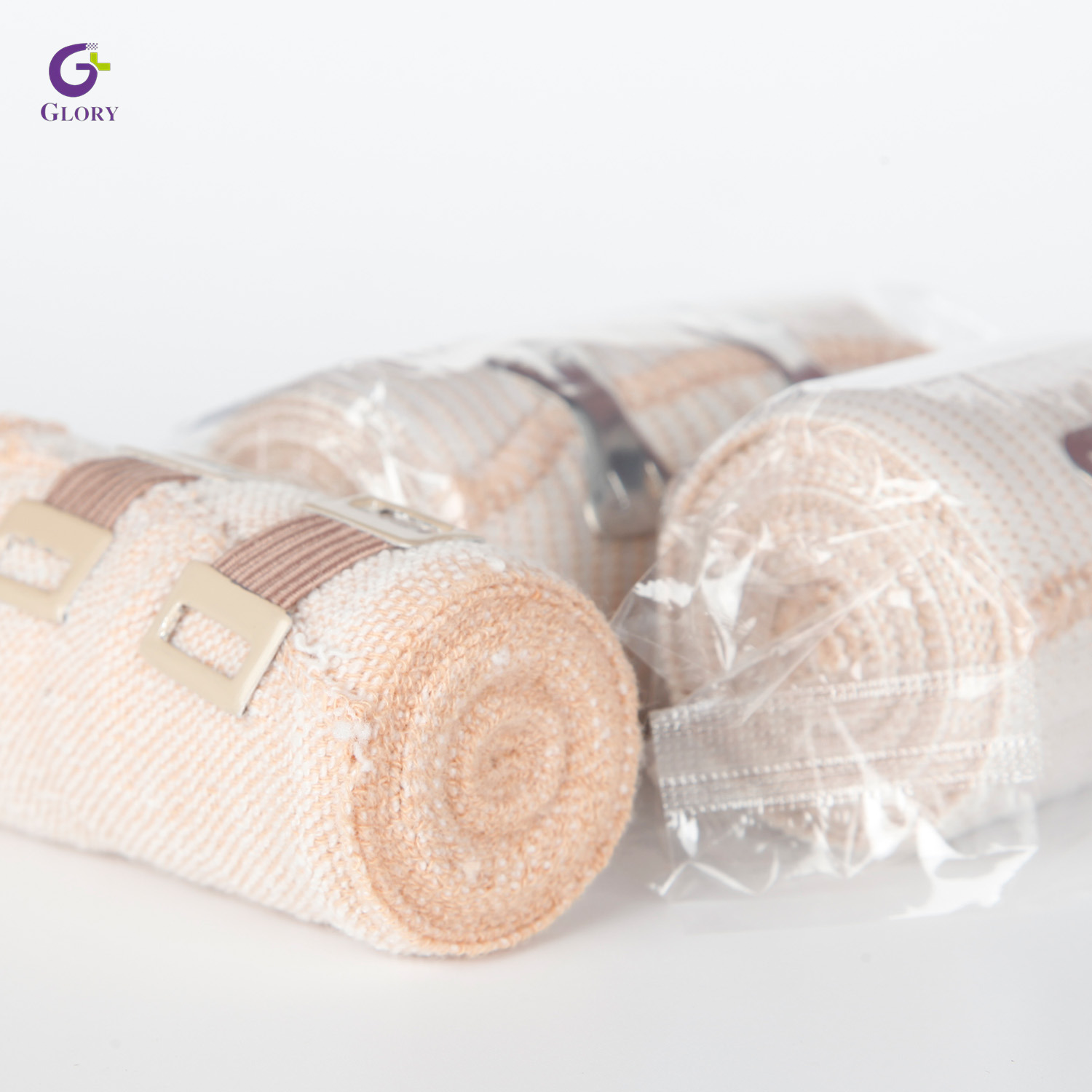
Classic woven bandages remain a staple in clinical settings due to their versatility and robust construction. These wraps combine cotton for breathability and skin comfort with synthetic elastomers like polyester or spandex. This combination provides the necessary stretch and recoil. We evaluate these traditional wraps based on their durability, reusability, and standard compression profiles. They excel in providing moderate to high resting pressure and withstand significant tension during application.
Woven blends present a distinct advantage for institutional procurement. High-quality woven wraps survive multiple wash cycles without suffering catastrophic elasticity degradation. This makes them highly economical for long-term individual patient use. You must educate the patient on proper laundering techniques. Specifically, they must avoid high-heat drying, which destroys the synthetic elastomers and renders the wrap useless.
Cohesive (Self-Adhering) Bandages
Cohesive wraps operate on a unique mechanical principle. Manufacturers engineer them to stick securely to themselves but not to skin, hair, or underlying clothing. They achieve this through a specialized micro-structured surface, often coated with a latex or synthetic cohesive agent, that interlocks when layered. This design eliminates the need for secondary fasteners like clips or tape.
The primary use cases for cohesive wraps are highly specific. They serve as the gold standard for securing primary dressings, especially over contoured body parts where traditional tape fails or causes skin shearing. In pediatric applications, cohesive wraps reduce anxiety during removal since they do not pull on hair. Sports medicine relies heavily on cohesive wraps for rapid, on-field joint stabilization where traditional adhesive tape proves impractical due to sweat or dirt.
Tubular Elastic Bandages
Tubular bandages offer a structural advantage by providing continuous-loop, 360-degree compression. Flat rolls require manual overlapping and precise tension control. Tubular designs deliver uniform pressure naturally dictated by the diameter of the material relative to the limb. This eliminates the risk of uneven wrapping and localized pressure spikes.
Selecting a tubular Medical Elastic Bandage requires strict adherence to sizing protocols. You must choose the size based on the broadest part of the limb being treated. If you fit it based on the narrowest point, the material will cause a tourniquet effect at the wider sections. You must cut the tube to an adequate length to prevent edge-rolling. Rolled edges create a sharp band of high pressure. In high-volume clinical settings, tubular bandages offer massive scalability. Staff can apply consistent compression rapidly without the manual tensioning required by flat wraps.
Sizing and Width: Matching the Bandage to the Anatomy
Small Extremities (Fingers, Toes, and Wrists)
Applying compression to small, highly articulated joints requires narrow materials. For fingers, toes, and pediatric wrists, 1-inch to 2-inch widths are the strict standard. Attempting to use wider materials on these small extremities introduces significant risks. Oversized bandages create excessive bulk, completely compromising joint mobility and making everyday tasks impossible for the patient.
Wide bandages on small joints fold and bunch during movement. These folds concentrate the compressive force into narrow ridges. This leads to uneven pressure distribution that easily restricts capillary blood flow and causes nerve impingement. Always match the width to the anatomical scale to maintain a flat, even surface across the skin.
Medium Joints (Ankles, Elbows, and Lower Legs)
The 3-inch to 4-inch widths serve as the workhorse sizes for most moderate anatomical structures. Ankles, elbows, and lower legs possess enough surface area to accommodate these widths without excessive bunching. They still require enough material flexibility to navigate sharp contours like the heel or the olecranon process.
Proper application on medium joints relies heavily on the figure-eight wrapping technique. This method anchors the wrap below the joint, crosses diagonally over the anterior surface, anchors above the joint, and crosses back down. The 3-inch and 4-inch widths calibrate perfectly for this technique. They allow for a consistent 50% overlap that ensures uniform pressure without creating gaps. Gaps lead to window edema, which is swelling that protrudes through unwrapped spaces.
Large Areas (Knees, Thighs, Shoulders, and Chest)
Major muscle groups and large joints demand 4-inch to 6-inch or wider bandages. The primary challenge when wrapping thighs, shoulders, or the chest is maintaining consistent tension over large, tapered muscle masses. A narrow wrap applied to a massive thigh will inevitably roll down, transforming into a tight, restrictive cord.
You must emphasize the core safety principle: wider bandages distribute force more safely across a larger surface area. According to the principles of physics governing pressure, a 6-inch Elastic Bandage applying the same total tension as a 2-inch wrap exerts significantly less localized pressure on the underlying tissue. Wider wraps are inherently less likely to restrict circulation and cause ischemic damage compared to narrow alternatives used improperly.
Compression Material Performance Comparison
Material Category | Resting Pressure | Working Pressure | Primary Clinical Indication | Reusability Profile |
|---|---|---|---|---|
Short-Stretch Woven | Low | High | Lymphedema, Venous Leg Ulcers | High (Washable, retains properties) |
Long-Stretch Woven | High | Low | Acute Sprains, Post-Op Support | Medium (Elastomers degrade over time) |
Cohesive Wrap | Low to Moderate | Low | Securing Dressings, Sports Taping | Single-Use (Loses cohesive property) |
Tubular Knit | Moderate | Moderate | Uniform Joint Support, Edema | High (Washable, cut-to-size) |
Technical Evaluation: Features-to-Outcomes Matrix
Stretch Capacity: Short-Stretch vs. Long-Stretch
Understanding the distinction between short-stretch and long-stretch dynamics ensures safe compression therapy. Short-stretch bandages possess minimal extensibility, typically stretching less than 70% of their original length. Because they do not stretch easily, they provide high working pressure. When the patient's muscles contract against the bandage, the rigid material forces the internal pressure inward, pumping fluid out of the limb. When the muscle relaxes, the resting pressure drops significantly. This makes short-stretch ideal for managing venous leg ulcers and lymphedema, where continuous high resting pressure proves dangerous.
Long-stretch bandages extend well beyond 140% of their resting length. They act like strong rubber bands, constantly pulling inward to return to their original state. This creates high resting pressure, delivering continuous compression even when the patient remains completely immobile. They offer low working pressure because the material simply yields and stretches further when the muscle contracts. Long-stretch wraps work best for acute joint injuries and post-operative support where continuous immobilization and swelling control are required.
Fastening Mechanisms and Security
The method used to secure the wrap dictates its reliability under dynamic movement. Traditional metal clips with sharp teeth effectively grip woven materials, but they carry distinct disadvantages. They pose a risk of skin puncture if applied incorrectly, they get lost easily, and they detach during vigorous activity. Metal clips are also incompatible with MRI environments, requiring removal before imaging.
Hook-and-loop closures integrated directly into the ends of the wrap offer a superior alternative for most outpatient applications. They provide a flat, secure hold that resists shearing forces during movement. Self-adhesive properties found in cohesive wraps offer the highest level of continuous security across the entire surface area. They sacrifice adjustability, as unrolling and rerolling cohesive material degrades its sticking power rapidly.
Latex vs. Latex-Free Formulations
The clinical mandate for latex-free environments prevents severe anaphylaxis and localized contact dermatitis in sensitized patients. Historically, natural rubber latex provided the highest quality stretch and recoil. Modern manufacturing has developed synthetic elastomers that replicate these properties without the allergenic proteins.
Natural rubber latex generally maintains its elasticity slightly longer under extreme tension. Synthetic latex-free formulations demonstrate superior resistance to degradation from body oils, topical ointments, and multiple high-temperature wash cycles. Defaulting to 100% latex-free materials eliminates the liability of accidental exposure while providing equivalent mechanical support for the patient.
Application-Specific Selection Frameworks
Acute Sports Injuries (Sprains and Strains)
When addressing acute musculoskeletal trauma, the immediate goal involves mitigating inflammatory swelling and stabilizing the joint. The selection criteria demand a wrap with high elasticity and moderate support. Long-stretch woven materials excel in this environment. They integrate seamlessly with the R.I.C.E. protocol, providing the necessary compression component.
Acute swelling fluctuates significantly within the first 48 hours. The wrap must allow for easy re-adjustability. A hook-and-loop fastening system allows the patient to loosen the wrap as swelling peaks and tighten it as the edema subsides. This maintains optimal resting pressure without risking circulatory compromise during the most volatile phase of the injury.
Post-Operative Edema and Lymphedema Management
Managing chronic fluid retention or post-surgical swelling requires consistent, graduated compression. The pressure must be highest at the distal end and gradually decrease proximally to encourage venous and lymphatic return. Short-stretch wraps are the clinical preference for lymphedema. Their high working pressure physically drives fluid upward during ambulation.
Specifically calibrated tubular bandages work exceptionally well for post-operative edema. By layering tubular bandages or selecting specific compression ratings, clinicians achieve exact pressure gradients. This removes the reliance on the manual wrapping skill of the patient or caregiver, ensuring consistent therapeutic pressure between clinic visits.
Securing Primary Wound Dressings and Splints
When the objective is simply to hold a sterile dressing or a rigid splint in place, applying heavy compression proves unnecessary and potentially harmful. The criteria shift toward low compression and high conformability. Lightweight cohesive wraps serve as the optimal choice for this specific task.
Cohesive materials conform perfectly to complex anatomical shapes without slipping. Because they stick only to themselves, they do not disrupt the primary sterile field, pull on sutures, or damage fragile periwound skin upon removal. They provide a secure, low-profile outer layer that protects the underlying wound care intervention without adding unwanted hydrostatic pressure.
Implementation Risks and Mitigation Strategies
Avoiding the Tourniquet Effect
The most severe risk associated with compression therapy is the tourniquet effect. This involves inadvertently restricting arterial blood flow or venous return due to excessive or localized pressure. Clinical staff must proactively identify the signs of restricted circulation. These include cyanosis, numbness or tingling, and a capillary refill delay exceeding two seconds.
Mitigation requires strict adherence to proper tensioning protocols. You must apply wraps with a consistent 50% overlap. Each new turn should cover half of the previous turn to ensure uniform pressure distribution. Apply tension only on the upward stroke as the wrap comes over the top of the limb. Never apply tension on the downward stroke to prevent pulling the limb out of alignment.
Correct roll positioning remains equally critical. Always hold the bandage with the starting end flat against the skin and the roll facing outward and upward. This orientation allows the unrolling action to naturally guide the tension. If you hold the roll facing inward, you lose mechanical leverage, resulting in jerky, uneven tension across the skin.
Contraindications and Open Wounds
You must enforce a strict, non-negotiable rule: never apply a non-sterile wrap directly over an open wound, incision, or compromised skin barrier. Doing so introduces massive infection risks and embeds foreign fibers directly into the healing tissue.
The mandatory pre-application protocol dictates that practitioners must thoroughly clean the wound, achieve hemostasis, and secure a sterile primary dressing before applying any type of outer wrap or splint. Compression wraps are strongly contraindicated for patients diagnosed with severe Peripheral Arterial Disease. In patients with compromised arterial flow, even mild external compression causes complete occlusion and subsequent tissue necrosis.
Preventing Rolling, Bunching, and Skin Maceration
Physical failure of the wrap during wear often stems from incorrect sizing. When a wrap is too narrow for a large limb, the edges roll down. This transforms a flat band of distributed pressure into a narrow cord of intense, localized pressure. Selecting the appropriate width based on anatomical guidelines serves as the primary defense against edge rolling.
Skin maceration occurs when moisture gets trapped against the epidermis, causing it to soften, break down, and become highly susceptible to fungal and bacterial infections. Evaluating the breathability of the selected material prevents this. In environments with high humidity or for patients who perspire heavily, prioritize high-cotton blends or specifically engineered moisture-wicking synthetics to preserve skin integrity.
Conclusion
Audit your current inventory to ensure you stock a complete variety of widths from 2-inch to 6-inch in all treatment areas.
Establish clear clinical guidelines that dictate exactly when staff should deploy short-stretch versus long-stretch materials based on specific patient diagnoses.
Train all staff and patients on safe wrapping techniques, enforcing the 50% overlap rule and correct roll positioning to prevent circulatory compromise.
Transition your facility to 100% latex-free cohesive and woven materials to eliminate the risk of allergic reactions.
FAQ
Q: How do I determine the correct width for an elastic bandage?
A: Match the width to the body part: 2-inch for wrists/hands, 3-inch for ankles/elbows, 4-inch for lower legs/knees, and 6-inch for thighs/chests to ensure even pressure distribution. Wider bandages are generally safer as they are less likely to restrict circulation.
Q: Can a medical elastic bandage be used on an open wound?
A: No. Elastic bandages are non-sterile and should never be applied directly to open wounds. The wound must first be cleaned and covered with a sterile primary dressing before the bandage is applied for securement or compression.
Q: What is the difference between a cohesive bandage and a traditional elastic bandage?
A: Cohesive bandages stick only to themselves without adhesive, making them ideal for securing dressings without pulling hair. Traditional bandages require clips or hook-and-loop fasteners and generally offer higher, more durable compression.
Q: How tight should an elastic bandage be applied?
A: It should be snug enough to provide support or control swelling but loose enough to allow normal blood flow. You should be able to slide two fingers comfortably under the wrapped bandage. Always start with the end flat against the skin and unroll outward for better tension control.
Q: Are elastic bandages reusable?
A: Traditional woven elastic bandages are typically washable and reusable until they lose their elasticity. Cohesive and lightweight medical wraps are generally designed for single use.
Q: What is a short-stretch elastic bandage used for?
A: Short-stretch bandages provide high pressure when the patient is moving and low pressure at rest. They are primarily used for managing lymphedema and venous disorders.
Q: How do you prevent an elastic bandage from rolling down?
A: Rolling is usually caused by using a bandage that is too narrow for the body part or wrapping with uneven tension. Selecting a wider bandage and ensuring a consistent 50% overlap during application prevents rolling. For tubular bandages, ensure sizing is based on the broadest part of the limb.
