


How to Choose a Patient ID Wristband for Adults, Infants, and Newborns
Views: 0 Author: Site Editor Publish Time: 2026-09-23 Origin: Site


Positive Patient Identification (PPID) serves as the primary fail-safe in clinical care. When a patient enters a facility, their physical link to the Electronic Medical Record (EMR) depends entirely on the band wrapped around their wrist. Wristband failures—fading ink, falling off, or scanning errors—directly cause adverse medical events. Hospitals experience heavy operational friction trying to balance barcode survivability, EMR integration, and patient comfort across diverse demographics. A bariatric adult in the ER requires a vastly different solution than a premature neonate in the NICU. A universal approach simply does not work. Procurement, admissions, and clinical informatics teams need a structured evaluation framework. Selecting the right patient ID wristband requires understanding material science, demographic needs, and existing printing infrastructure. This guide provides field-tested strategies to standardize identification protocols while ensuring specialized units get the exact tools they need.
Demographic Specificity is Non-Negotiable: A universal approach fails; adult bands prioritize chemical resistance, while a newborn identification wristband must prioritize skin integrity and mother-baby linkage.
Print Infrastructure Dictates Options: The choice between direct thermal, thermal transfer, and laser printable bands heavily influences workflow efficiency, hardware requirements, and long-term barcode readability.
Compliance Baselines: Every hospital patient wristband must reliably display a minimum of two identifiers (e.g., full name, medical record number) and maintain 100% scan rates through exposure to water, alcohol, and hand sanitizers.
The Cost of Misidentification: Framing the Evaluation Criteria
The clinical implications of poor patient identification cascade rapidly through a healthcare system. Unreadable bands jeopardize the "Five Rights" of medication administration. These rules dictate that the right patient must receive the right drug, in the right dose, via the right route, at the right time. When a nurse scans a faded barcode and receives an error, they often resort to manual workarounds. Typing a medical record number into the EMR introduces human error. This leads to severe medication mistakes, delayed lab results, and blood transfusion incompatibilities.
Nurses spend valuable shift time re-printing and re-banding patients whose bracelets degrade from shower water or hand sanitizer. To eliminate this operational waste, you must establish strict success criteria for any viable identification system. Baseline requirements include zero-degradation barcode scanning, inherent antimicrobial properties to prevent cross-contamination, and tamper-evident closures that prevent patients from swapping identities.
Procurement teams constantly battle the standardization versus specialization trade-off. Supply chain managers want to minimize SKU counts to streamline ordering and reduce storage overhead. However, clinical units demand specialized solutions. The robust, chemical-resistant band required for a trauma patient in the ER is entirely inappropriate for a fragile infant in the pediatric ward. Successfully navigating this trade-off means building a tiered inventory system. You cover general admissions with a standardized product while stocking specialized bands exclusively in the departments that require them.
Let's examine the specific failure points hospitals encounter with substandard identification bands:
Barcode Degradation: Hand sanitizers containing isopropyl alcohol dissolve standard direct thermal print within hours, rendering the barcode completely unreadable by bedside scanners.
Physical Trauma: Patients snag bands on bed rails or wheelchair armrests, tearing the material and losing their identification entirely during transport.
Moisture Penetration: Daily showering causes paper-based bands to disintegrate, requiring immediate replacement and interrupting the nursing workflow.
Adhesive Failure: Poor quality adhesives lose tackiness in high-humidity environments or when exposed to body heat, causing bands to fall off unnoticed in bed linens.
Skin Irritation: Rigid plastic edges dig into the skin, causing contact dermatitis or micro-abrasions that increase the risk of hospital-acquired infections.
To combat these failures, clinical informatics teams must map the exact journey of the wristband from the admissions printer to the patient's discharge. Every touchpoint represents a potential point of failure. If the admissions clerk struggles to load the media roll, the intake process stalls. If the bedside nurse cannot get a clean scan on the first attempt, medication administration is delayed. The evaluation criteria must account for both the physical durability of the band and the operational efficiency of the printing and application process.
Evaluating Patient ID Wristbands by Demographic
Adult Hospital Patient Wristbands
Adult patient populations present unique sizing and durability challenges. Fastenings must offer universal adjustability to accommodate all wrist sizes, from standard to bariatric. Nurses should never have to daisy-chain multiple bands together to fit a larger patient, as this creates a weak point that easily breaks. Adjustable adhesive closures or secure snap mechanisms prevent the band from slipping off. More importantly, these closures must feature tamper-evident designs. If a patient attempts to peel an adhesive closure, the material should shred. This indicates tampering and prevents the band from being transferred to another individual.
Durability for extended stays is another primary factor. A standard paper band will not survive a multi-week admission. Materials must resist continuous exposure to bodily fluids, betadine, surgical scrubs, and isopropyl alcohol. Daily showering and constant friction against bed linens should never compromise the 2D barcode on a hospital patient wristband. If the barcode degrades, the entire closed-loop medication administration system breaks down.
Color-coding and alert systems further complicate adult band selection. Hospitals rely on standardized color-coded alerts to communicate patient status instantly. Red typically indicates an allergy, yellow signals a fall risk, and purple denotes a Do Not Resuscitate (DNR) order. Facilities integrate these alerts either by applying secondary colored bands alongside the primary ID or by utilizing advanced printers. These printers generate color blocks directly onto a single, unified wristband, reducing physical clutter on the patient's arm.
When evaluating adult bands, consider these operational requirements:
Tensile Strength: The material must withstand at least 40 pounds of pull force without snapping or stretching out of shape.
Chemical Resistance: The printed barcode must remain scannable after repeated exposure to 70% isopropyl alcohol and standard hospital disinfectants.
Skin Breathability: The inner surface should allow moisture to escape, preventing contact dermatitis during long stays.
Scanner Compatibility: The surface finish must be matte rather than glossy to prevent glare from interfering with infrared barcode scanners.
Infant Patient Wristbands (Pediatrics)
Pediatric care introduces distinct anatomical challenges. Securing bands on tapering infant wrists or ankles requires precision. Standard adult bands simply slide over a toddler's hand. You must utilize specialized designs that contour to small limbs without causing dangerous constriction. Often, placing the band on the ankle provides a more secure fit for active infants who constantly pull at their wrists.
Tamper-evident and security features become even more necessary in pediatric wards. Closures must permanently lock upon application. You cannot risk an unauthorized removal of an infant patient wristband. The adhesive or snap must withstand the constant tugging and chewing common with young patients. This ensures the identification remains intact until discharge.
Material softness is a non-negotiable requirement. Active pediatric patients move constantly, creating friction between the band and their skin. Stiff materials with sharp edges cause micro-cuts and skin tears. These injuries open pathways for hospital-acquired infections. Pliable, non-abrasive edges made from soft vinyl or advanced synthetic blends protect delicate skin while maintaining the structural integrity needed for accurate barcode scanning.
Nurses in pediatric units frequently encounter issues with bands becoming soiled from food or bodily fluids. The chosen material must be completely non-porous, allowing staff to wipe the band clean with a damp cloth without smudging the printed patient data. Furthermore, the band must be narrow enough not to impede the placement of intravenous lines or pulse oximeter sensors on small limbs.
Newborn Identification Wristbands (Labor, Delivery, and NICU)
The labor and delivery environment demands flawless mother-infant matching pairs. Hospitals utilize 4-part or 5-part sequential wristband systems to establish an unbreakable family link immediately at birth. One band goes to the mother, one to the partner or guardian, and two secure the newborn. You must print critical data points to protect mothers and newborns before the umbilical cord is even cut. This data includes the baby's full name, the exact date and time of birth, the mother's or guardian's name, and a unique hospital ID.
Neonatal skin integrity requires the highest level of material science. Premature infants in the NICU possess incredibly fragile, underdeveloped skin. Standard plastics cause severe friction injuries and pressure ulcers. A specialized newborn identification wristband must utilize ultra-soft, latex-free, and hypoallergenic materials. Foam-backed bands provide a cushioned barrier. They protect premature skin while keeping the barcode flat and scannable.
Elopement prevention and security represent the final layer of neonatal protection. Modern newborn bands often integrate active RFID tags or specialized umbilical clamps within the wristband ecosystem. If an infant is moved near an unauthorized exit, these tags instantly trigger ward alarms, lock doors, and alert security personnel. This effectively prevents infant abduction and ensures absolute safety in the maternity ward.
The application process in the delivery room must be instantaneous. Nurses cannot struggle with complex clasps while attending to a newborn. The bands must feature simple, one-handed application mechanisms that lock securely in a fraction of a second. The sequential numbering printed on all parts of the multi-band set provides a visual and scannable confirmation that the infant belongs to the correct parents, eliminating any possibility of a mix-up during the chaotic moments following birth.
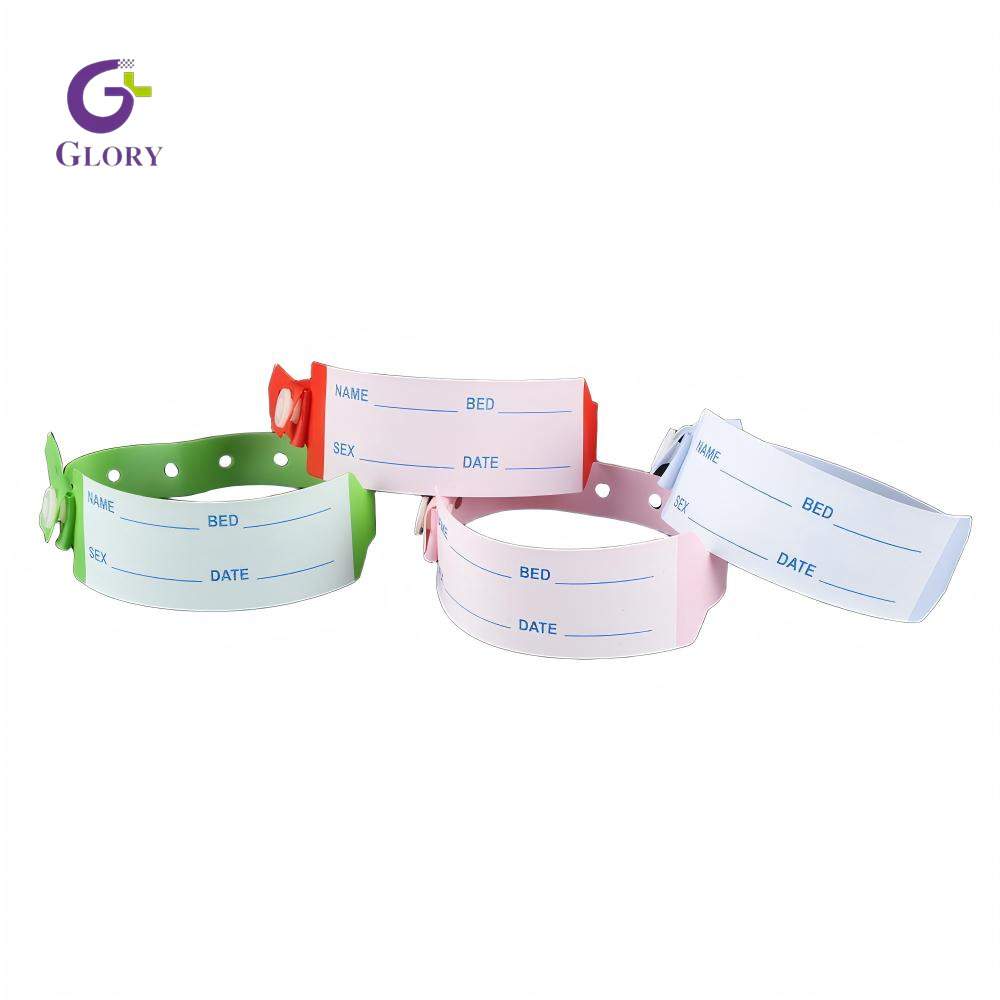
Technical Evaluation Dimensions: Features to Outcomes
Print Technology: Thermal vs. Laser
The print technology you select dictates your hardware requirements, workflow efficiency, and the long-term survivability of the patient data. Direct thermal printing remains highly popular due to its point-of-care convenience. It requires no ink ribbons. The printer applies heat directly to chemically treated paper or synthetic bands. This allows for fast, on-demand printing at the admissions desk. However, direct thermal bands face severe susceptibility to fading. Because the material reacts to heat, leaving a band near a heat source or exposing it to harsh chemical solvents like hand sanitizer can cause the entire band to turn black or fade to white. This destroys the barcode.
Laser printing offers a different workflow. Admissions staff print bands on standard ward printers alongside patient intake paperwork, utilizing sheet-fed designs. This eliminates the need for dedicated wristband printers. The primary risk involves toner flaking. If you do not use specialized medical-grade laser bands designed to bond with the toner, the printed data will chip off when the band bends around the patient's wrist.
Thermal transfer represents the gold standard for durability. This method uses a printer to melt a resin or wax-resin ribbon directly onto a synthetic band. The resulting print is essentially a permanent plastic-on-plastic bond. It withstands prolonged exposure to hot water, alcohol, and abrasion. This makes it ideal for long-term care facilities, trauma centers, and extended hospital admissions where barcode degradation is unacceptable.
To choose the correct print technology, evaluate your facility's specific needs:
Assess the average length of stay for your patient population. Short stays may only require direct thermal, while long-term care demands thermal transfer.
Evaluate the physical space at your admissions desks. Laser sheet printing utilizes existing hardware, saving counter space.
Review the chemical exposure risks in your specific wards. High use of hand sanitizers necessitates the chemical resistance of thermal transfer printing.
Determine the IT department's capacity to manage and maintain a fleet of dedicated thermal printers versus standard laser printers.
Material Science and Design
Selecting the right substrate determines both patient comfort and operational success. Tyvek offers basic durability and tear resistance, but it can feel stiff and uncomfortable. Soft vinyl improves patient comfort significantly and resists moisture well, though it can trap sweat against the skin. Advanced polypropylene blends deliver the optimal mix of maximum chemical resistance, flexibility, and longevity. This ensures the barcode remains crisp regardless of environmental exposure.
Material Type | Durability Profile | Patient Comfort Level | Best Clinical Use Case |
|---|---|---|---|
Tyvek | High tear resistance, low chemical resistance | Low (can be stiff/scratchy) | Short-term outpatient clinics, day surgeries |
Soft Vinyl | Moderate durability, waterproof | High (pliable and smooth) | Standard adult inpatient admissions (3-5 days) |
Polypropylene Blend | Extreme chemical and moisture resistance | Medium-High (flexible but firm) | Trauma ER, long-term care, frequent scanning |
Foam-Backed Synthetic | Moderate durability, highly protective | Maximum (cushioned) | NICU, premature neonates, severe burn victims |
The debate between adhesive and snap closures centers on security versus adjustability. Snaps offer definitive, physical locking mechanisms that cannot be undone without cutting the band. However, snap closures can feel bulky and may dig into the wrist if the patient lies on their arm. Adhesives provide infinite adjustability, allowing nurses to find the perfect fit. To ensure security, adhesive bands must feature tamper-evident slit designs that destroy the band if someone attempts to unpeel it.
Shielded versus unshielded designs also impact longevity. Shielded bands feature a clear overlay that folds over the printed data, sealing it completely. This physical barrier protects patient information from moisture, physical abrasion, and chemical spills. While unshielded bands print faster, shielded bands guarantee barcode survivability during highly active or extended admissions.
Compliance, Security, and Implementation Risks
Meeting Regulatory Identifiers
Regulatory alignment protects your facility from audits and fines. The Joint Commission and HIPAA mandate strict identification protocols. The selected medical ID band must reliably support the required minimum of two identifiers. Typically, this includes the patient's full legal name and their unique medical record number or date of birth. Furthermore, the design should shield sensitive data from casual observation where necessary. This ensures patient privacy in crowded emergency waiting rooms or shared recovery spaces.
Barcode verification standards are equally critical. A barcode that looks fine to the human eye may fail under a scanner. You must ensure your bands produce ANSI-graded barcodes, aiming for Grade A or B. Curved wrist surfaces and harsh fluorescent hospital lighting create glare that confuses lower-grade barcodes. High-contrast, ANSI-verified prints guarantee seamless interoperability with bedside medication verification (BMV) scanners. This prevents clinical bottlenecks during medication rounds.
To maintain compliance, facilities must regularly audit their identification processes. This involves checking that the correct identifiers are consistently printed and that the barcodes remain scannable throughout the patient's stay. Any failure to meet these standards can result in severe penalties and, more importantly, compromise patient safety.
Mitigating Implementation Risks
Hardware compatibility stands as the most common implementation hurdle. Purchasing bands that do not match your existing printer fleet causes constant printer jams and sensor alignment errors. It can even void warranties on thermal printers. Always verify core sizes, roll diameters, and media sensor compatibility before executing a bulk order.
Staff adoption and workflow integration dictate the success of any new system. Select bands that are intuitive to load into printers, easy to peel, and simple to apply. Admissions professionals serve as the first touchpoint in the patient journey. If the intake process becomes bogged down by complicated wristband assembly, the delay cascades through the entire hospital. Ensure the application process is as seamless for admissions staff as the scanning process is for bedside nurses.
Never execute a hospital-wide rollout without pilot testing. Run a structured clinical trial period of at least 30 days in a high-acuity unit, such as the ER or ICU. This allows you to test real-world survivability. You gather direct feedback from nursing staff regarding scanner performance. You also identify any adhesive failures or skin irritation issues before committing to a facility-wide contract.
During the pilot phase, monitor these specific metrics:
Reprint Rates: Track how often nurses must print replacement bands due to fading or physical damage.
Scan Success Rate: Measure the percentage of barcodes that scan successfully on the first attempt.
Application Time: Time how long it takes admissions staff to print, peel, and apply the band to a patient.
Patient Feedback: Document any complaints regarding skin irritation, tightness, or general discomfort.
Conclusion
To upgrade your facility's identification protocols and eliminate barcode scanning failures, execute the following steps immediately:
Request a physical sample kit of a disposable ID bracelet to conduct tactile evaluations of material softness and closure security.
Audit your current printer fleet to document exact make, model, and media sensor types before contacting vendors.
Schedule a workflow assessment with a healthcare identification specialist to map your admissions-to-bedside processes.
Launch a 30-day pilot program in a high-traffic department to test real-world durability and gather nursing feedback.
FAQ
Q: What minimum information must be printed on a patient ID wristband?
A: Standard regulatory requirements mandate at least two unique identifiers. This typically includes the patient's full legal name and their medical record number or date of birth. Infant bands require additional critical data, such as the exact time of birth, gender, and the mother's name, to ensure accurate family linkage and prevent mix-ups.
Q: How do newborn identification wristbands differ from adult bands?
A: Newborn bands utilize multi-part matching sets printed simultaneously for parent-child linkage. They include specific birth data rather than just standard identifiers. Furthermore, they feature ultra-soft, foam-backed, and latex-free materials to protect fragile neonatal skin from friction, abrasions, and pressure injuries.
Q: Are thermal or laser hospital patient wristbands better?
A: Direct thermal bands offer excellent point-of-care convenience and fast printing without ribbons, though they can fade under chemical exposure. Laser bands utilize a sheet-fed workflow that integrates easily with standard intake paperwork. Thermal transfer is generally preferred for maximum barcode longevity and resistance to hospital chemicals.
Q: How do you prevent an infant patient wristband from falling off?
A: Hospitals use highly adjustable, tamper-evident adhesive closures that securely fit all sizes without constricting blood flow. For infants with tapering limbs, placing the bands securely on the ankles rather than the wrists prevents them from slipping over the hands and getting lost in the bedding.
Q: What makes a disposable ID bracelet "medical-grade"?
A: A medical-grade band withstands continuous exposure to hospital chemicals, bodily fluids, and harsh hand sanitizers without degrading. It features inherent antimicrobial coatings and a hypoallergenic, latex-free composition. The surface material is specifically engineered to produce high-contrast, ANSI-graded barcodes for accurate scanning.
Q: How do mother-baby wristband pairs work in labor and delivery?
A: Admissions or labor and delivery staff utilize a sequential numbering system. Adult-sized and infant-sized bands are printed and applied simultaneously before the umbilical cord is cut. This immediate physical linkage prevents mix-ups and ensures accurate identification throughout the entire hospital stay.
