


How Does an Elastic Bandage Provide Compression and Support?
Views: 0 Author: Site Editor Publish Time: 2026-08-26 Origin: Site


Effective edema management and joint stabilization rely heavily on the mechanical properties of the chosen wound care or orthopedic wrap. Selecting the wrong wrap or misunderstanding the limits of its elasticity leads to compromised venous return, inadequate tissue support, or increased risk of localized tissue ischemia. Furthermore, confusion around colloquial terminology—often referring to these as "ACE bandages" or "Tensor bandages"—obscures the specific technical requirements needed for clinical efficacy. To make informed procurement or clinical protocol decisions, you must understand the exact biomechanical mechanisms by which an Elastic Bandage delivers controlled compression and structural support, as well as the material specifications that dictate its efficacy. Proper application dictates patient recovery speed, making material selection a primary concern for frontline healthcare providers and athletic trainers alike.
Mechanism of Action: Elastic wraps manage swelling by increasing interstitial hydrostatic pressure, forcing fluid back into the lymphatic and venous systems, while simultaneously easing localized pain.
Support Limitations: They provide proprioceptive feedback and mild dynamic support but are not substitutes for rigid immobilization devices in severe structural injuries.
Material Impact: The choice between woven, knitted, and cohesive materials dictates the balance between resting pressure, working pressure, and overall durability.
Evaluation Criteria: Clinical selection must weigh latex-free compliance, fastening mechanisms, stretch capacity, and cost-per-use against specific patient outcomes.
The Biomechanics of Compression: How an Elastic Bandage Works
Managing Edema Through Interstitial Pressure
Following soft tissue trauma, damaged capillaries leak protein-rich fluid into the surrounding interstitial spaces. This fluid accumulation causes visible swelling and localized tissue hypoxia. Applying external mechanical pressure directly counteracts this internal fluid leakage. The wrap increases interstitial hydrostatic pressure, physically resisting further exudate pooling. This forces accumulated fluid back into the lymphatic and venous systems for natural clearance.
You must apply this pressure using a strict graduated compression gradient. The wrap must be tighter at the distal end of the extremity and gradually looser as it moves proximally toward the heart. This specific gradient facilitates optimal venous return. Failing to establish a graduated gradient creates a dangerous tourniquet effect. A reverse gradient traps fluid in the extremity, worsening edema and potentially causing severe vascular compromise.
Clinical efficacy depends on maintaining this pressure consistently over hours or days. The elastomer core of the wrap must possess enough memory to resist stretching out completely as the patient moves. When applied correctly, the mechanical resistance acts as a secondary fascial layer, keeping interstitial spaces compressed and guiding fluid upward against gravity.
Capillary Leakage: Trauma disrupts local blood vessels, spilling plasma into interstitial spaces.
Hydrostatic Resistance: The applied wrap creates a rigid external boundary, raising tissue pressure.
Fluid Reabsorption: High interstitial pressure forces excess fluid into lymphatic capillaries.
Venous Return: Graduated compression pushes deoxygenated blood proximally toward the heart.
Pain Modulation and Thermal Retention
Swelling directly contributes to localized pain by causing severe tissue distension. As fluid stretches the skin and underlying fascia, it triggers mechanoreceptors and nociceptors, sending continuous pain signals to the brain. A properly applied Compression Support Bandage provides gentle, consistent pressure that physically limits this distension. By restricting the physical expansion of the tissue, the wrap significantly reduces the mechanical stimulation of these pain receptors.
Beyond mechanical pressure, these wraps offer a secondary physiological benefit through thermal retention. The overlapping layers of fabric trap mild body heat close to the skin. This localized warmth soothes the injured area and promotes mild vasodilation during the sub-acute healing phase. Increased localized blood flow delivers required oxygen and nutrients to the damaged tissues while accelerating the removal of cellular debris.
This thermal effect must be monitored carefully. Excessive heat retention in the immediate acute phase (the first few hours post-injury) can sometimes exacerbate bleeding. However, once the initial bleeding phase subsides, the retained warmth becomes a primary component of the overall pain modulation and tissue recovery process.
Resting Pressure vs. Working Pressure
Understanding the distinction between resting pressure and working pressure is mandatory for proper clinical application. Resting pressure defines the constant, baseline force exerted by the wrap against the skin when the underlying muscle is completely relaxed. Working pressure defines the temporary, active resistance the wrap provides when the underlying muscle contracts and expands against the fabric.
High-stretch wraps typically deliver high resting pressure and low working pressure. Because the material is highly extensible, it yields easily when the muscle contracts, offering minimal resistance. When the muscle relaxes, the strong elastic memory constantly pulls inward, maintaining a firm grip on the limb. This specific dynamic makes high-stretch wraps ideal for acute, resting injuries where the patient remains mostly immobile.
Conversely, low-stretch materials provide low resting pressure but high working pressure. They do not squeeze the limb tightly at rest. When the patient walks or flexes, the rigid material refuses to yield, forcing the muscle expansion inward and driving deep venous blood upward. Selecting the correct stretch profile ensures the therapy matches the patient's mobility level and specific vascular needs.
Pressure Dynamics Comparison
Bandage Type | Resting Pressure | Working Pressure | Primary Clinical Indication |
|---|---|---|---|
High-Stretch (Long Stretch) | High | Low | Immobile patients, acute joint sprains |
Low-Stretch (Short Stretch) | Low | High | Active patients, lymphedema management |
Multi-Layer Systems | Moderate | High | Severe venous leg ulcers |
Evaluating Support Capabilities vs. Immobilization
Proprioceptive Feedback and Joint Stability
Joint stability relies on more than just mechanical ligaments; it depends heavily on the neuromuscular system. Proprioception is the body's subconscious awareness of joint position and movement in space. After a sprain or strain, localized swelling and tissue damage often disrupt these proprioceptive signals. This disruption leaves the joint vulnerable to further awkward movements and secondary injuries.
Applying a wrap provides immediate, continuous tactile sensation on the skin surrounding the joint. This constant physical contact stimulates cutaneous mechanoreceptors. These receptors send enhanced neurological feedback to the central nervous system, effectively hyper-sensitizing the brain to the joint's exact position. This heightened awareness helps patients instinctively avoid moving the compromised joint into painful or dangerous ranges of motion.
This proprioceptive enhancement represents the primary mechanism of support provided by flexible wraps. The patient feels a sense of security and stability. The brain receives better data to coordinate protective muscle contractions. This dynamic support system proves highly effective for mild sprains and functional rehabilitation phases.
The Limits of a Compression Support Bandage
You must establish realistic clinical expectations regarding structural support. Flexible wraps do not provide true mechanical immobilization. They lack the rigidity required to stabilize fractures, severe dislocations, or grade III complete ligament tears. Relying on a flexible wrap for severe structural trauma invites dangerous joint displacement and prolonged healing times.
Clinical decision-making involves a deliberate trade-off. You must balance the desire to preserve a functional range of motion against the absolute need for rigid bracing. Flexible wraps prevent rapid muscle atrophy by allowing micro-movements and safe, limited articulation. They keep the joint engaged without locking it down entirely.
When a patient requires absolute immobilization, you must transition to fiberglass casts, thermoplastic splints, or rigid hinged braces. Flexible wraps serve best as an intermediate step. They bridge the gap between initial acute swelling management and the eventual return to full, unsupported functional activity.
Core Material and Design Specifications
Woven vs. Knitted Elasticity
The manufacturing process dictates the performance, breathability, and longevity of the wrap. Woven materials interlace threads at right angles, creating a dense, highly durable fabric. This tight construction offers superior compression control and withstands aggressive stretching. Woven wraps generally carry a higher initial acquisition value but survive multiple washing cycles without losing their structural integrity.
Knitted materials loop threads together in a continuous, interlocking pattern. This creates a lighter, highly breathable fabric that conforms easily to complex anatomical contours. Knitted wraps excel in warm environments or during active rehabilitation where moisture management is a priority. However, they typically degrade faster than woven alternatives and may lose their compressive memory after repeated heavy use.
The elastomer core material heavily influences both woven and knitted designs. Modern wraps utilize advanced spandex or elastane cores rather than traditional natural rubber. These synthetic elastomers provide exceptional memory, ensuring the wrap snaps back to its original length even after hours of maximum extension. This recovery capability prevents the wrap from sagging and slipping down the patient's limb.
Material Construction Overview
Material Construction | Breathability Level | Compression Control | Ideal Clinical Application |
|---|---|---|---|
Heavy Woven | Low | Maximum | Post-operative edema, severe acute sprains |
Standard Knitted | High | Moderate | Active sports rehabilitation, warm climates |
Cohesive (Non-woven) | Moderate | Variable | Single-use athletic taping, urgent care |
Fastening Systems and Application Consistency
The method used to secure the wrap directly impacts patient safety and tension consistency. Traditional metal clips feature sharp internal teeth designed to grip the fabric. While historically common, these clips present significant risks. They frequently puncture fragile skin, easily detach and get lost, and create localized pressure points that can cause tissue necrosis under tight application.
Hook-and-loop closures offer a superior, integrated alternative. These fasteners sit flat against the wrap, eliminating puncture risks. They allow for rapid, secure application and easy tension adjustments by the patient. The primary drawback involves degradation over time; lint and repeated commercial washing can clog the hooks, reducing their grip strength.
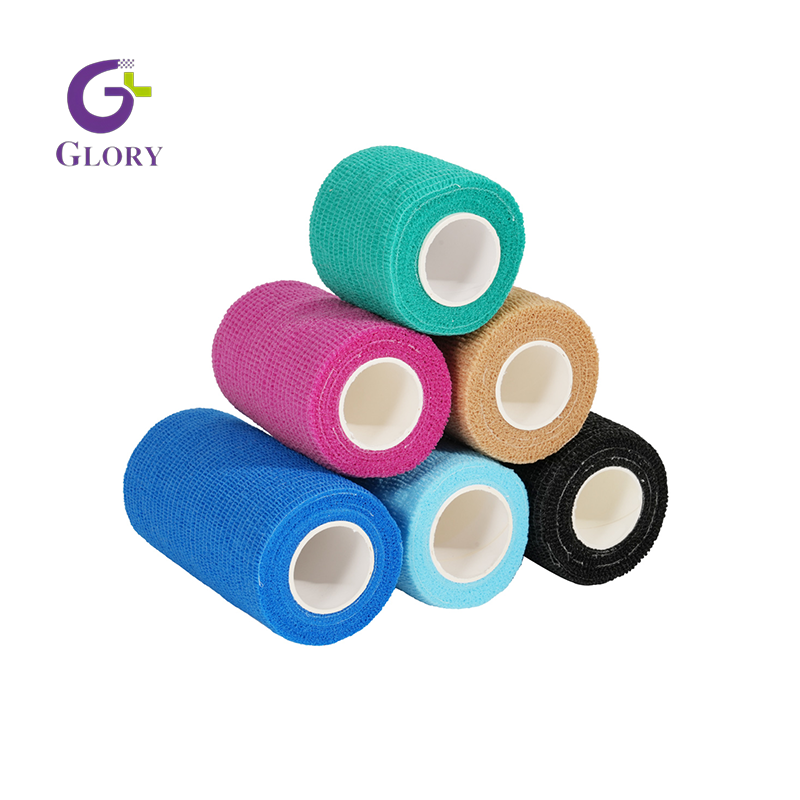
Self-adhesive or cohesive wraps represent a distinct category. These materials are treated with a specialized cohesive agent that sticks aggressively to itself but absolutely refuses to adhere to skin, hair, or primary wound dressings. Cohesive wraps provide unparalleled security for active use, as they will not slip or unravel during vigorous movement. They are typically designated for single-use applications.
Compliance and Allergy Risk Mitigation
Modern clinical environments demand strict adherence to allergy mitigation protocols. The historical reliance on natural rubber latex in elastomer cores caused severe complications, ranging from mild contact dermatitis to life-threatening Type I anaphylactic reactions. The industry has largely shifted toward 100% latex-free formulations to eliminate this liability entirely.
Procurement teams must verify that all incoming inventory explicitly states latex-free compliance. This protects both vulnerable patient populations and healthcare workers who develop latex sensitization through repeated daily exposure. Synthetic elastomers like polyurethane and spandex now provide identical, if not superior, stretch characteristics without the associated protein allergens.
Furthermore, incorporating hypoallergenic cotton blends improves patient compliance during extended wear times. Synthetic fibers alone can trap sweat and irritate sensitive skin. Blending high-quality cotton into the wrap ensures better moisture wicking, softer skin contact, and a reduced risk of maceration when the wrap remains in place for several days.
Clinical Use Cases and Evidence-Based Efficacy
Post-Operative Application (e.g., Orthopedic Surgery)
Orthopedic surgeries, particularly Total Knee Arthroplasty (TKA) and ligament reconstructions, trigger massive localized inflammatory responses. Post-surgical hemarthrosis (bleeding into the joint space) and severe edema can delay rehabilitation and increase the risk of deep vein thrombosis. Applying a firm wrap immediately post-operation physically compresses the joint capsule, limiting the space available for blood and fluid to pool.
Clinical evidence supports the use of controlled compression to accelerate the return of normal joint function. By minimizing the initial swelling spike, patients experience less pain during early physical therapy sessions. They achieve baseline flexion and extension milestones faster when the joint is not severely distended by internal fluid pressure.
Clinicians must carefully balance this compression with wound site oxygenation. Wrapping a surgical site too tightly restricts arterial blood flow, depriving healing tissues of necessary oxygen. Protocols dictate regular unwrapping and inspection to ensure the surgical incision remains well-perfused and free from ischemic complications.
Acute Sports Injuries (Sprains and Strains)
In sports medicine, managing acute sprains requires immediate intervention. The traditional R.I.C.E. protocol (Rest, Ice, Compression, Elevation) and the modern P.E.A.C.E. & L.O.V.E. framework both heavily prioritize immediate mechanical compression. Applying a wrap within the first few minutes of a sprain drastically alters the injury's trajectory.
During the first 24 to 48 hours, damaged blood vessels flood the area with inflammatory exudate. Immediate compression collapses these damaged vessels, minimizing the initial hematoma. This proactive approach prevents the tissue from expanding rapidly, which would otherwise stretch the skin and cause intense, throbbing pain.
Athletic trainers rely on these wraps to provide a safe, temporary support structure on the sidelines. The wrap stabilizes the joint enough to allow the athlete to bear minimal weight while moving to the training room for a comprehensive diagnostic evaluation. It serves as the primary first line of defense against runaway inflammation.
Position the joint in a neutral, functional alignment before beginning the wrap.
Anchor the material distally (below the injury site) with two firm, overlapping circular turns.
Apply a figure-eight pattern across the joint to provide multidirectional stability.
Overlap each previous layer by exactly fifty percent to ensure uniform pressure distribution.
Secure the proximal end firmly without creating a restrictive top band.
Wound Protection and Secondary Dressing Fixation
Beyond orthopedic support, flexible wraps play a primary role in advanced wound care. Patients with extensive burns, venous leg ulcers, or fragile geriatric skin often require primary dressings like sterile gauze, hydrocolloids, or calcium alginates. Securing these primary dressings with standard medical adhesives often results in severe skin tears upon removal.
A flexible wrap provides a safe, tape-free fixation method. You simply wrap the material over the primary dressing, using gentle tension to hold it firmly against the wound bed. This ensures the primary dressing maintains optimal contact with the wound without subjecting the surrounding healthy skin to harsh, skin-stripping adhesives. Geriatric patients often suffer from skin tears caused by the routine removal of standard medical tapes. By utilizing a flexible wrap to secure non-adhesive primary dressings, you eliminate the mechanical stripping of the epidermis. During dressing changes, you simply unroll the wrap, leaving the fragile peri-wound skin completely undisturbed.
The overlapping layers of the wrap create a robust physical barrier. This barrier protects the healing wound from secondary mechanical trauma, such as bumping against furniture. It also shields the sterile primary dressing from environmental contaminants, dirt, and debris, maintaining a clean environment conducive to rapid granulation.
Procurement and Selection Framework
Sizing and Width Requirements by Anatomical Region
Applying the correct width is non-negotiable for achieving a proper compression gradient. Using a wrap that is too narrow for a large limb creates a tourniquet effect, as the thin band bites deeply into the tissue. Using a wrap that is too wide for a small joint causes excessive bunching, wrinkling, and uneven pressure distribution.
Standardizing a sizing matrix ensures clinical consistency. Use 2-inch widths strictly for small extremities like wrists, hands, and pediatric ankles. Utilize 3-inch widths for adult elbows and standard ankle sprains. Step up to 4-inch widths for large adult knees and lower legs. Reserve 6-inch widths for massive anatomical regions like shoulders, upper thighs, and chest wrapping.
When the width matches the anatomical contour, the wrap lays flat against the skin. This flat application prevents the edges from rolling down during movement. A rolled edge instantly transforms a broad, safe compression band into a narrow, dangerous constriction ring that impedes venous return. If you apply a 2-inch wrap to an adult thigh, the material will immediately roll into a tight cord. This cord acts as a tourniquet, cutting off superficial venous return and causing distal swelling. Conversely, applying a 6-inch wrap to a wrist creates massive fabric overlap. This overlap eliminates the ability to control the compression gradient, resulting in a bulky, ineffective dressing.
Assessing Durability, Washability, and Usage Lifespan
Evaluating the lifecycle of inventory requires analyzing how different materials hold up under clinical stress. Single-use cohesive wraps offer ultimate convenience and eliminate cross-contamination risks. They require zero laundering and provide guaranteed tension out of the package. However, high-volume clinics burn through cohesive inventory rapidly.
Washable, reusable woven wraps offer a longer usage lifespan but require strict maintenance protocols. You must evaluate how the elastomer core handles repeated laundering. High-heat commercial washing and autoclave sterilization processes rapidly degrade synthetic elastomers. The intense heat destroys the material's memory, leaving the wrap limp and incapable of delivering therapeutic resting pressure.
To maximize the lifespan of reusable inventory, establish protocols for low-heat washing and air-drying. Clinicians must physically inspect reusable wraps before application. If the fabric appears rippled, frayed, or fails to snap back immediately when stretched, it has reached the end of its functional lifespan and must be discarded.
Standardization and Inventory Consolidation
Hospitals and athletic departments frequently suffer from severe SKU bloat, stocking dozens of slightly different wraps from various manufacturers. This bloat creates confusion on the floor, leads to inconsistent patient care, and complicates supply chain logistics. Standardizing inventory streamlines operations and ensures all staff use reliable, predictable materials.
Audit your current usage to identify the most common clinical scenarios. Consolidate your purchasing around a core matrix of latex-free, hook-and-loop woven wraps for reusable orthopedic needs, and high-quality cohesive wraps for urgent care and wound fixation. Standardizing on three or four specific widths covers the vast majority of patient demographics.
By reducing the number of distinct items in the supply room, you simplify staff training. Clinicians become highly familiar with the specific stretch characteristics of the standardized wraps, leading to more accurate tension application and better overall patient outcomes.
Conclusion
Audit your current wound care and orthopedic inventory to ensure 100% latex-free compliance across all departments.
Evaluate the failure rate and skin-puncture incidents associated with your current fastening mechanisms, phasing out metal clips immediately.
Request physical samples of varying elasticity grades from medical suppliers to test the difference between working and resting pressures in your specific clinical applications.
Implement a standardized sizing matrix in your supply rooms to prevent staff from applying incorrect widths to complex joints.
FAQ
Q: How tight should an elastic bandage be applied for optimal compression?
A: It should be snug enough to provide firm, consistent pressure without causing numbness, tingling, or discoloration in the extremities. A two-finger rule—being able to slide two fingers under the wrap—is a standard clinical guideline. Always ensure the wrap is tighter at the distal end and looser proximally to promote upward blood flow.
Q: Can you sleep with a compression support bandage on?
A: Generally, you should not sleep with high-stretch elastic wraps unless specifically instructed by a physician. When your body is inactive, the high resting pressure can impede arterial blood flow and cause dangerous tissue ischemia. If nighttime compression is required, doctors usually prescribe specific low-stretch garments designed for resting phases.
Q: What is the difference between an elastic bandage and a cohesive bandage?
A: Standard elastic wraps require external metal clips or integrated hook-and-loop fasteners to stay securely in place. Cohesive bandages are manufactured with a specialized treatment that allows the fabric to stick only to itself. They will not adhere to skin, hair, or other fabrics, making them ideal for active use and painless removal.
Q: How long does an elastic bandage retain its compression capabilities?
A: Depending on the elastomer blend and washing protocols, a high-quality reusable wrap can maintain its elasticity for several months of regular use. However, you must discard it immediately once it loses its snap, appears permanently rippled, or begins to fray, as it can no longer provide a reliable compression gradient.
Q: Does an elastic bandage help heal a sprain faster?
A: While it does not accelerate the biological cellular healing of torn ligaments, it manages the severe swelling that inhibits range of motion. It eases localized pain by reducing tissue distension and provides necessary proprioceptive support. This protects the vulnerable joint from further mechanical stress, facilitating a safer recovery process.
