


What Are Sterile Gauze Swabs Used For?
Views: 0 Author: Site Editor Publish Time: 2026-07-31 Origin: Site


Effective wound management and infection control rely heavily on the precise selection of primary and secondary dressings. Utilizing the wrong type of swab—such as applying non-sterile materials to open tissues or selecting highly adherent woven cotton for granulating wounds—increases the risk of cross-contamination, delays healing, and inflates long-term facility costs. This guide breaks down the specific clinical applications of sterile gauze swabs, compares material configurations, and provides a framework for evaluating wound dressing products to ensure optimal patient outcomes and procurement efficiency. Clinical staff and procurement teams must understand the mechanical properties of these materials to make informed decisions on the floor.
Targeted Application: Sterile gauze swabs are mandatory for open wounds, surgical incisions, and deep abrasions to prevent the introduction of pathogens, whereas non-sterile variants are reserved for intact skin or secondary absorption layers.
Material Trade-offs: The choice between traditional woven cotton and non woven dressing pads dictates linting rates, wound adherence, and fluid retention capabilities.
Procurement Metrics: Evaluating disposable gauze swabs requires analyzing ply count (e.g., 8-ply vs. 12-ply), sizing configurations, sterility packaging integrity, and compliance with medical device standards.
Risk Mitigation: Proper selection minimizes clinical risks such as tissue maceration, wound bed trauma during dressing changes, and hospital-acquired infections (HAIs).
The Fundamental Role of Gauze Swabs in Wound Care
Medical facilities consume massive quantities of Gauze Swabs daily. These foundational consumables absorb exudate, clean wound beds, and provide a physical barrier against environmental contaminants. You will find them in every department, from emergency rooms to outpatient clinics. Their primary job is managing moisture and protecting vulnerable tissue from external pathogens.
Within the broader ecosystem of wound dressing products, gauze occupies a specific niche. It functions either as a primary contact layer directly touching the wound or a secondary absorbent layer backing up a more specialized primary dressing. Understanding this hierarchy prevents improper application. A highly absorbent secondary layer placed directly on a dry wound will adhere and cause trauma upon removal.
Effective gauze must meet strict baseline requirements. High absorbency pulls fluid away from the skin. Structural integrity ensures the material does not disintegrate when wet. Biocompatibility guarantees the fibers will not trigger an allergic or inflammatory response in human tissue. When evaluating options, clinical staff look for materials that hold together under mechanical stress during scrubbing or packing.
Dressing Layer | Primary Function | Typical Material Requirement |
|---|---|---|
Primary Contact | Direct wound protection, moisture balance | Sterile, low-adherence, biocompatible |
Secondary Absorbent | Exudate management, physical cushioning | High absorbency, structural integrity |
Tertiary Securing | Holding primary/secondary layers in place | Elasticity, adhesive properties |
Primary Clinical Applications: What Are Sterile Gauze Swabs Used For?
Open Wound Exudate Management
Managing fluid output is a daily challenge in wound care. Sterile swabs absorb blood, serum, and purulent discharge from acute lacerations, mild cuts, grazes, and abrasions. The capillary action of the gauze fibers draws moisture away from the wound bed. This wicking process prevents tissue maceration, where prolonged exposure to moisture causes skin to break down and become white and friable. Proper exudate management keeps the wound edges healthy and promotes faster epithelialization.
Immediate Hemostasis and Bleeding Control
When a patient presents with active bleeding, immediate physical intervention is necessary. Applying direct physical pressure to active hemorrhages, minor punctures, and post-surgical sites relies heavily on sterile gauze. The physical structure of the woven or non-woven fibers provides a scaffold. This scaffold promotes platelet aggregation and clotting. Rapid hemostasis stabilizes the patient and allows clinicians to assess the underlying tissue damage accurately.
Surgical Incision Protection and Post-Operative Care
Post-operative sites require strict infection control protocols. Sterile barriers are necessary over fresh surgical sutures or staples. sterile gauze swabs cushion the incision site against mechanical trauma. A patient shifting in bed or wearing tight clothing can easily disrupt fresh sutures. The gauze provides a physical buffer while maintaining a clean, dry healing environment that discourages bacterial colonization.
Antiseptic Application, Topical Ointments, and Wound Cleansing
Gauze is not just for absorption; it is a delivery mechanism. Clinicians use sterile swabs as a vehicle for saline, iodine, antibacterial ointments, or soothing creams. The material holds the liquid or semi-solid agent and allows for controlled application.
Open the sterile packaging without touching the internal swab.
Apply the prescribed antiseptic or ointment directly to the center of the gauze.
Place the impregnated gauze onto the wound bed, ensuring full coverage of the affected area.
Secure the primary layer with appropriate medical tape or a secondary bandage.
Sterile materials are strictly required for debridement. Wiping away necrotic tissue or slough must be done without introducing new bacteria into the compromised site.
Packing Deep Wounds and Cavities
Deep or tunneling wounds present unique healing challenges. They must heal from the base upward. Specialized use of sterile gauze involves packing these cavities to absorb exudate from the inside out. If a deep wound closes at the surface first, it traps bacteria and fluid, leading to abscess formation. Clinicians carefully insert fluffed gauze into the void, ensuring it contacts all surfaces without being packed too tightly, which would restrict blood flow.
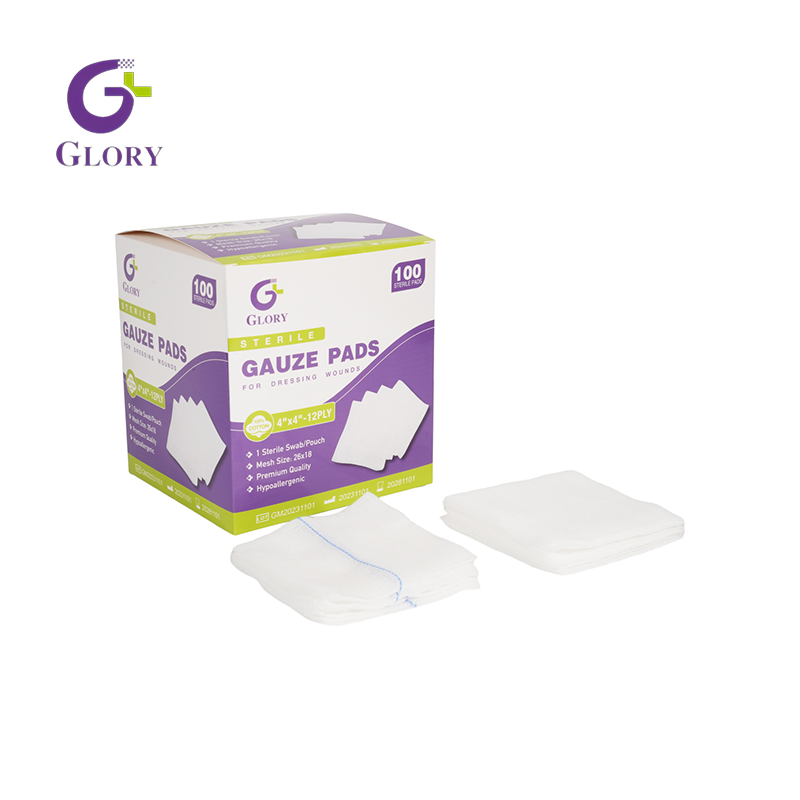
Sterile vs. Non-Sterile Gauze Swabs: A Decision Framework
When to Mandate Sterile Gauze Swabs
Sterility is an absolute clinical requirement under specific conditions. Whenever internal tissues are exposed to air, sterile products are mandatory. Invasive procedures, central line dressing changes, and treating immunocompromised patients leave no room for error. Manufacturers use robust sterilization methods, such as Gamma irradiation or Ethylene Oxide gas. These processes destroy all viable microorganisms. The chosen method impacts product shelf life and packaging requirements, ensuring the swab remains sterile until the pouch is opened.
Acceptable Uses for Non-Sterile Variants
Non-sterile gauze has a massive footprint in healthcare facilities. It is perfectly safe for cleaning intact skin before an injection. Staff use it for padding splints or casting materials. It works well for wiping down medical instruments after use. Furthermore, non-sterile gauze acts as an excellent secondary absorbent layer, provided a sterile primary dressing completely covers the actual wound bed.
Cost-to-Risk Trade-offs in Procurement
Using sterile products for non-sterile applications drains facility resources rapidly. Balancing inventory requires a clear framework for product allocation. Supply chain managers must evaluate the clinical risk of cross-contamination against the volume of supplies consumed. Training staff to reach for non-sterile sleeves for surface wiping and reserve individually pouched sterile swabs for open wounds optimizes inventory utilization.
Application Scenario | Required Sterility | Rationale |
|---|---|---|
Surgical incision coverage | Sterile | Direct contact with deep tissue and vascular system |
Intact skin cleansing | Non-Sterile | Skin barrier is unbroken; normal flora present |
Deep wound packing | Sterile | High risk of deep tissue infection and abscess |
Instrument wiping | Non-Sterile | Instruments will undergo separate sterilization later |
Material Evaluation: Woven Cotton vs. Non Woven Dressing Pads
Traditional Woven Gauze Swabs
Traditional woven gauze features 100% cotton yarn woven into a distinct mesh pattern, commonly referred to as Type VII gauze. This construction has been the standard for decades. It is highly porous, allowing for excellent aeration of the wound. The rough texture makes it highly effective for mechanical debridement, gripping and pulling away dead tissue during dressing changes. Clinicians often prefer the traditional tactile feel of woven cotton.
Excellent mechanical debridement capabilities due to abrasive texture.
Familiar handling characteristics for veteran nursing staff.
Higher risk of linting, leaving loose cotton fibers trapped in the wound bed.
Prone to adhering to granulating tissue, causing pain and bleeding upon removal.
Synthetic and Blended Non Woven Dressing Pads
non woven dressing pads utilize a different manufacturing process. Instead of weaving yarns, manufacturers press fibers—often a rayon and polyester blend—together under heat and pressure. This creates a uniform, dense material. They offer significantly lower linting, reducing the risk of foreign body reactions in the wound. They boast higher tensile strength when wet and greater fluid retention. Most importantly, they exhibit less adherence to granulating tissue. Their less abrasive texture makes them slightly less effective for aggressive mechanical debridement, and they possess a different fluid wicking profile compared to woven cotton.
Evaluating Disposable Gauze Swabs for Facility Procurement
Sizing Specifications and Dimensional Selection
Standard industry sizing configurations include 5cm x 5cm, 7.5cm x 7.5cm, and 10cm x 10cm. Selecting the correct dimension aligns directly with clinical needs. Using a 10cm pad for a minor puncture wastes material. Conversely, using multiple 5cm pads for a large abrasion increases the risk of gaps in coverage. Providing the correct sizes reduces medical waste. It also limits clinical improvisation, like cutting gauze with scissors, which releases loose fibers into the sterile field.
Ply Count and Absorbency Metrics
The ply, or number of layers, in disposable gauze swabs is a critical performance metric. Products are commonly available in 8-ply, 12-ply, or 16-ply configurations. An 8-ply swab is thin and flexible, suitable for minor cleansing, wiping, or covering small incisions. A 16-ply swab offers substantial thickness and fluid capacity, making it necessary for heavy exudate management, applying pressure to arterial bleeds, and deep wound packing.
Packaging and Sterility Maintenance
Packaging formats dictate how the product is stored and accessed. Individual peel pouches offer the highest level of sterility maintenance but generate more waste. Blister packs provide rigid protection for delicate materials. Bulk non-sterile sleeves are efficient for high-volume, low-risk applications. Packaging integrity is vital for maintaining sterility during transport, handling, and storage in chaotic clinical environments. A compromised seal renders the contents non-sterile immediately.
Regulatory Compliance and Quality Standards
Procurement teams must verify necessary certifications before approving a supplier. ISO 13485 certification demonstrates a manufacturer's commitment to medical device quality management. CE marking indicates compliance with European health and safety standards. FDA Class I medical device registration is mandatory for use in the United States. Lot traceability allows facilities to track specific batches in the event of a recall, and strict expiration date management prevents the use of degraded materials.
Implementation Risks and Mitigation in Wound Management
Risk of Tissue Maceration and Adherence
Leaving saturated gauze on a wound too long causes maceration. The surrounding healthy skin absorbs the excess fluid, breaking down the epidermal barrier. Conversely, dry gauze left on a low-exudate wound will adhere to the newly formed tissue. Ripping it off destroys hours of healing progress.
Assess wound exudate levels daily to determine appropriate dressing change frequency.
Utilize non-adherent contact layers beneath traditional gauze for sensitive or dry wounds.
Moisten adhered gauze with sterile saline prior to removal to minimize tissue trauma.
Switch to synthetic non-woven pads if adherence remains a persistent issue.
Cross-Contamination During Dressing Changes
Improper handling of sterile packaging compromises the swab before it ever touches the patient. Touching the center of the pad or dropping it on a non-sterile surface introduces pathogens. Facilities must enforce aseptic non-touch technique (ANTT) training. Selecting easy-open, tear-resistant packaging helps staff access the material without accidental contamination.
Inventory Management for Disposable Gauze Swabs
Stockouts of critical sterile supplies halt procedures and compromise patient care. Expiration of over-ordered sterile inventory wastes facility funds. Supply chain teams must establish par levels based on historical usage data. Clearly separating sterile and non-sterile SKUs in the supply room prevents staff from grabbing the wrong item during an emergency.
Conclusion
Conduct a physical audit of current wound care inventory to identify redundant SKUs.
Assess the frequency of linting or adherence issues reported by nursing staff using existing woven gauze.
Request physical samples of synthetic non-woven pads for hands-on clinical evaluation.
Update facility dressing protocols to clearly define when sterile versus non-sterile materials are required.
FAQ
Q: Can you use non-sterile gauze on an open wound?
A: No. Non-sterile gauze should not be used directly on open wounds due to the high risk of introducing bacteria and causing infections. Always use sterile gauze for open tissues.
Q: What is the difference between a gauze swab and a gauze sponge?
A: In clinical settings, the terms are often used interchangeably. Both refer to folded squares of gauze used for absorbing fluids, cleaning, or covering wounds.
Q: How often should sterile gauze swabs be changed on a wound?
A: Dressing change frequency depends on the wound type and exudate level. Generally, gauze should be changed when it becomes saturated, soiled, or according to a clinician's specific protocol.
Q: Are non woven dressing pads better than traditional woven gauze?
A: Non-woven pads are better for reducing linting and preventing wound adherence, making them ideal for granulating wounds. Woven gauze is often preferred for mechanical debridement due to its abrasive texture.
Q: What does "ply" mean when purchasing disposable gauze swabs?
A: "Ply" refers to the number of layers of material folded together to create the swab. Higher ply counts, such as 16-ply, offer greater absorbency and thickness compared to lower ply counts like 8-ply.
Q: Do sterile gauze swabs expire?
A: Yes. Sterile gauze swabs have an expiration date, which indicates how long the manufacturer guarantees the integrity of the sterile packaging. Do not use expired sterile products on open wounds.
Q: Can sterile gauze swabs be used for burn wounds?
A: While sterile gauze can be used as a secondary dressing for burns, it should generally not be used as the primary contact layer, as dry gauze can adhere to the burn and cause severe trauma upon removal.
