


What Are the Common Uses of an Elastic Bandage in Medical Care?
Views: 0 Author: Site Editor Publish Time: 2026-08-08 Origin: Site


Walk into any clinic, hospital, or athletic training room, and you will find compression supplies readily available. While applying these wraps seems simple, achieving the correct compression gradient is a complex clinical skill. Improper selection or application of compression therapy routinely leads to adverse patient outcomes. These complications include tissue ischemia, inadequate edema control, and delayed post-surgical rehabilitation. Selecting the right product requires more than grabbing the first available roll from the supply cart. Medical professionals need a standardized evaluation framework. You must choose the appropriate Elastic Bandage based on specific clinical indications, material properties, and facility-wide procurement goals. Understanding the mechanics of compression ensures patient safety while optimizing supply chain efficiency. We will explore primary use cases, material dynamics, and risk mitigation strategies to improve clinical outcomes and standardize care protocols.
Clinical Versatility: Elastic bandages are primarily indicated for acute musculoskeletal support, post-surgical edema management, first aid hemorrhage control, and securing secondary dressings or splints.
Material Dynamics Matter: The choice between short-stretch and long-stretch wraps dictates the resting and working pressure applied to the patient, directly impacting venous return and swelling.
Risk Mitigation: Standardizing application protocols is critical to preventing the "tourniquet effect," skin breakdown, and compromised distal circulation.
Procurement Efficiency: Balancing single-use infection control mandates with the durability of reusable wraps is the primary cost-evaluation metric for medical supply chain managers.
Framing the Clinical Problem: Primary Uses and Success Criteria
Defining Success in Compression Therapy
Success in compression therapy relies on achieving a specific physiological balance. The primary clinical objectives include stabilizing vulnerable joints, reducing interstitial fluid accumulation, and protecting surgical or traumatic wound sites. You must accomplish these goals without compromising arterial blood flow. An effective application delivers graduated pressure. This specific pressure gradient pushes fluid centrally toward the heart while allowing fresh, oxygenated blood to reach distal tissues.
Failure to maintain this physiological balance results in either ineffective edema control or dangerous circulatory restriction. Clinicians must understand the underlying pathology of the swelling to apply the correct mechanical force. When capillary hydrostatic pressure exceeds the osmotic pressure keeping fluid within the vessels, edema forms. External compression artificially increases tissue hydrostatic pressure, forcing fluid back into the lymphatic and venous systems for clearance.
Acute Orthopedic Injury and Sports Medicine
Orthopedic injuries demand immediate intervention to limit secondary tissue damage. In the acute phase of sprains and strains, compression limits the rapid influx of inflammatory fluids. When a ligament tears, local capillaries leak plasma into the surrounding tissue. Applying an Elastic Medical Wrap provides necessary counter-pressure to these injured capillaries, physically blocking excessive fluid accumulation and limiting the expansion of the hematoma.
Beyond acute trauma, sports medicine relies heavily on prophylactic use. Athletes use dynamic joint support during recovery and physical therapy. This support enhances proprioception, helping patients maintain awareness of joint positioning during complex movements. It also provides a mechanical barrier against excessive range of motion during early rehabilitation phases. Athletic trainers frequently utilize these wraps to anchor protective pads or secure ice packs immediately following intense physical exertion, adhering to standard acute injury protocols.
Wound Fixation, First Aid, and Immobilization
Emergency responders and trauma nurses frequently utilize compression supplies for rapid patient stabilization. You can efficiently secure cold therapy packs to acute injuries, minimizing swelling before the patient reaches a hospital. For suspected bone fractures, these wraps hold rigid splints firmly in place prior to radiographic imaging and casting. Whether applying a volar splint for a wrist fracture or a sugar-tong splint for an ankle, the wrap provides the necessary circumferential tension to keep the rigid fiberglass or plaster components immobilized against the limb.
In first aid and trauma settings, securing pressure dressings over acute bleeding wounds is a life-saving function. The goal is to apply enough localized pressure to facilitate hemostasis. Providers must avoid acting as an unintended tourniquet. Proper technique ensures venous compression stops bleeding without occluding deeper arterial pathways. First responders rely on the elasticity of the material to conform to irregular body contours, ensuring the underlying gauze remains firmly pressed against the laceration during patient transport.
Post-Surgical Edema Control
Post-operative swelling complicates recovery, increases pain, and delays mobility. Following orthopedic procedures like Total Knee Arthroplasty (TKA) or anterior cruciate ligament (ACL) reconstruction, evidence-based applications of external pressure significantly reduce intraarticular swelling. Controlling this edema improves early range of motion and accelerates the rehabilitation timeline. Without adequate compression, fluid pools in the dependent areas of the limb, stretching the skin and placing excessive tension on the surgical incision line.
Clinical teams must establish strict criteria for these applications. You have to balance the need for adequate compression with the necessity of frequent surgical wound inspections. Wraps that are too difficult to remove and reapply often lead to skipped wound checks. Alternatively, they result in inconsistent compression gradients upon reapplication by different shift nurses. A standardized approach ensures the surgical site remains protected from shear forces while maintaining the precise pressure required to prevent hematoma formation.
Vascular and Lymphatic Applications
Managing chronic vascular conditions requires a fundamentally different approach than acute injury care. Patients with chronic venous insufficiency, venous stasis ulcers, and deep vein thrombosis (DVT) prophylaxis require sustained, specific pressure profiles. Venous ulcers heal only when venous hypertension is reversed through external mechanical force. The incompetent valves in the veins fail to prevent the backflow of blood, leading to pooling and subsequent tissue breakdown.
Differentiating between acute and chronic needs is vital for patient safety. Acute injuries typically require temporary, high-resting pressure to stop immediate swelling. Chronic edema management, particularly lymphedema, relies on low-resting, high-working pressure systems. This specialized dynamic facilitates continuous lymphatic drainage during patient ambulation without causing ischemic pain when the patient is resting in bed.
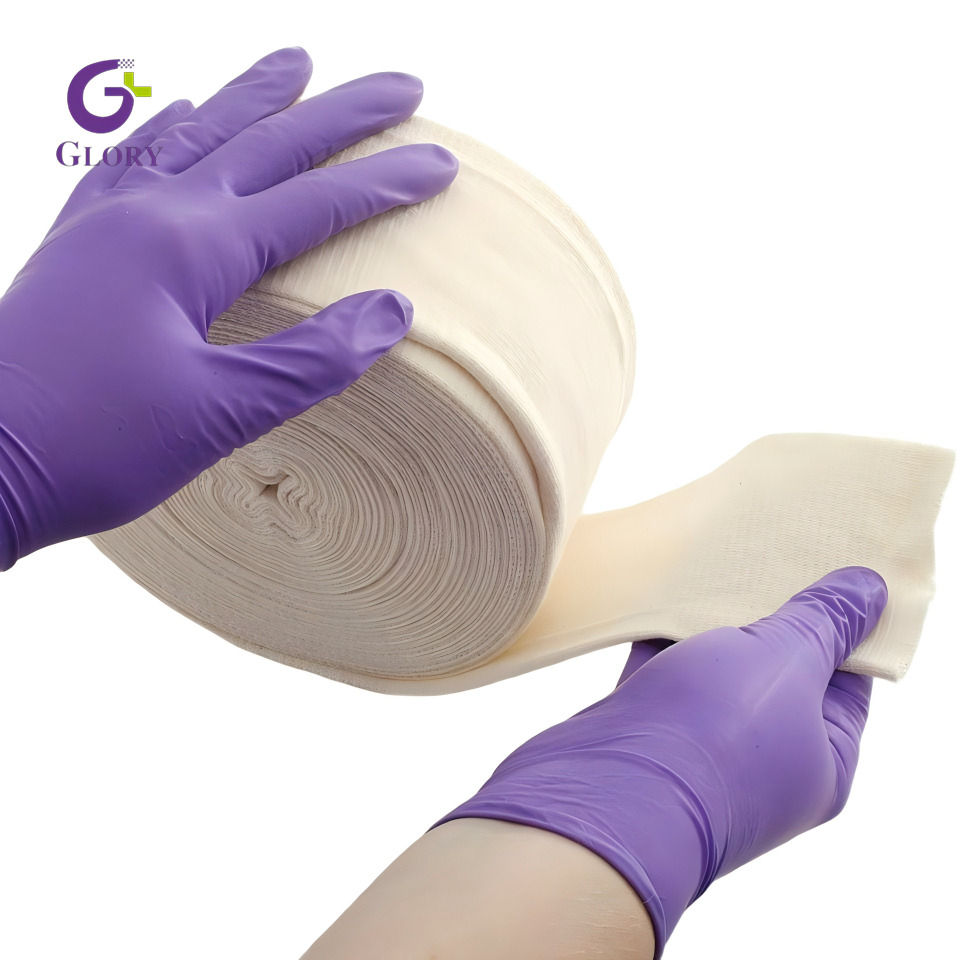
Solution Categories: Types of Elastic Medical Wraps
Long-Stretch vs. Short-Stretch Bandages
Understanding stretch dynamics is non-negotiable for effective therapy. Long-stretch bandages feature high resting pressure and low working pressure. They stretch up to 200% of their original length. Because they constantly try to recoil to their original size, they exert continuous pressure on the limb even when the patient is completely still. These are highly suitable for immobile patients or providing acute joint support where immediate, sustained compression is necessary.
Short-stretch bandages offer low resting pressure and high working pressure. They only stretch about 30% to 60%. When a patient moves, the calf muscle expands against the rigid barrier of the bandage. This creates a powerful massaging effect that pumps fluid upward toward the heart. Because they do not squeeze tightly when the muscle is relaxed, they are the standard of care for managing lymphedema and venous ulcers in ambulatory patients.
Stretch Dynamics in Compression Therapy
Feature | Long-Stretch Wraps | Short-Stretch Wraps |
|---|---|---|
Extensibility | 140% to 200% stretch capacity | 30% to 60% stretch capacity |
Resting Pressure | High (exerts constant squeeze at rest) | Low (comfortable during inactivity) |
Working Pressure | Low (yields to muscle expansion) | High (forms rigid barrier against muscle) |
Primary Indication | Acute sprains, joint support, immobile patients | Lymphedema, venous ulcers, ambulatory patients |
Wear Time | Usually removed at night | Can be worn day and night |
Material Composition: Latex vs. Latex-Free
Historically, natural rubber latex provided superior elasticity and memory. The medical industry has seen a massive shift toward latex-free synthetic elastomers. Modern wraps utilize advanced spandex, polyurethane threads, and woven cotton blends to replicate the stretch profile of natural rubber. These synthetic polymers are engineered to withstand degradation from body oils and clinical ointments better than natural rubber.
This transition eliminates facility-wide anaphylaxis risks. Latex allergies pose severe threats to both patients and healthcare workers, ranging from contact dermatitis to life-threatening respiratory distress. Standardizing on latex-free materials prevents accidental exposure, simplifies inventory management, and ensures compliance with modern safety regulations without sacrificing stretch quality or therapeutic efficacy.
Fastening Mechanisms
How a wrap stays in place impacts both safety and clinical efficacy. The fastening mechanism dictates how easily the tension can be adjusted and how secure the dressing remains during patient movement. Facilities must evaluate the mechanical failure points of each option.
Traditional metal clips: These often get lost in bed linens, can puncture fragile skin, and pose serious ingestion risks for pediatric or cognitively impaired geriatric populations. They also create artifacts on radiographic imaging.
Hook-and-loop closures: These provide secure, adjustable fastening without sharp edges. They are highly preferred for patient self-care and rapid clinical adjustments during wound checks.
Self-adhering cohesive wraps: These stick only to themselves, not to skin, hair, or secondary dressings. They offer excellent slip resistance but are typically designed for single-use applications.
Evaluating the safety profile of each fastener type is necessary for risk management. Facilities increasingly ban metal clips due to skin tear risks, favoring hook-and-loop or cohesive options for improved patient safety and compliance.
Clinical Evaluation Dimensions: Mapping Features to Patient Outcomes
Compression Gradients and Pressure Retention
A wrap is only effective if it maintains its intended pressure over time. Different weaves maintain elasticity differently through extended wear and multiple wash cycles. Poor-quality materials quickly lose their recoil. This results in a tourniquet slipping down the leg, pooling fluid at the ankle, or completely failing to control joint swelling. Elastomeric fatigue occurs when the polymer chains within the fabric break down under sustained tension.
Consistent sub-bandage pressure is required for effective edema reduction. If the pressure drops rapidly after application, interstitial fluid will quickly re-accumulate in the tissue spaces. Evaluating pressure retention ensures the chosen product delivers therapeutic benefits throughout the entire prescribed wear time. High-quality elastomers resist fatigue, ensuring the pressure applied at hour one remains consistent at hour twelve.
Breathability and Moisture Management
Prolonged compression inherently traps heat and sweat against the epidermis. Evaluating the porosity of the bandage material is essential for maintaining skin health. Clinical evaluations often look at the moisture vapor transmission rate (MVTR) of the fabric to determine how effectively it allows sweat to evaporate.
Moisture-wicking properties prevent maceration. Maceration is the softening and breaking down of skin resulting from prolonged exposure to moisture. Maintaining skin integrity under prolonged compression prevents secondary bacterial or fungal infections. This is particularly critical in vulnerable populations with compromised vascular systems, such as diabetic patients. Cotton blends generally offer superior breathability compared to purely synthetic wraps, keeping the underlying skin cool and dry.
Sizing and Anatomical Conformability
Applying the wrong size compromises the entire treatment protocol. You need a framework for selecting appropriate widths to ensure even pressure distribution and prevent the material from rolling at the edges. According to Laplace's Law, sub-bandage pressure is inversely proportional to the radius of the limb and the width of the bandage. A narrower bandage applies higher pressure than a wider bandage applied with the exact same tension.
Anatomical Sizing Guidelines for Compression Wraps
Width | Target Anatomy | Clinical Rationale |
|---|---|---|
2-inch | Wrists, hands, pediatric ankles | Conforms to small, complex joint angles without excessive bulk. |
3-inch | Adult arms, elbows, small adult ankles | Provides balanced coverage for medium-radius extremities. |
4-inch | Adult lower legs, large ankles, shoulders | Standard clinical choice for lower extremity edema control. |
6-inch | Knees, thighs, torso swathes | Prevents roping and edge-rolling on large-radius body parts. |
Using a narrow wrap on a large joint causes the material to rope and dig into the skin. This creates dangerous localized pressure points that impede superficial venous circulation and cause severe discomfort.
Procurement and Standardization Trade-Offs
Cost per Use vs. Lifecycle Durability
Supply chain managers face constant pressure to optimize spending without compromising patient care. Analyzing the financial trade-offs between purchasing premium, reusable products versus lower-cost, single-use alternatives requires a comprehensive operational view. You must look beyond the initial acquisition cost and evaluate the entire lifecycle of the product within the facility.
While reusable wraps offer a lower per-unit cost over an extended timeline, you must factor in the labor, logistics, and sterilization costs associated with laundering them. Heavy-duty cotton blends withstand dozens of high-temperature wash cycles without losing elasticity. Single-use cohesive wraps eliminate laundering costs and cross-contamination risks entirely but require higher initial purchasing volumes and generate more medical waste. Facilities often deploy single-use wraps in high-risk infection areas like burn units, while utilizing reusable wraps in outpatient physical therapy clinics.
Inventory Consolidation
SKU bloat plagues hospital supply rooms and outpatient clinics. Managing dozens of different brands, sizes, and stretch profiles leads to clinical confusion, wasted storage space, and expired products. When staff face too many options, they frequently select the wrong product for the specific clinical indication.
Strategies for reducing SKU bloat focus on standardizing a core set of multi-purpose, latex-free wraps. Identifying a versatile Elastic Medical Wrap that meets 80% of facility needs streamlines ordering processes. It reduces storage requirements and vastly simplifies staff training. When clinicians have fewer, higher-quality options to choose from, application errors decrease, and patient outcomes become more predictable.
Regulatory and Compliance Standards
Medical supplies must meet stringent quality benchmarks to ensure safety and efficacy. Reviewing necessary FDA classifications ensures the products are legally cleared for their intended medical use, whether for simple wound dressing retention or complex lymphedema management. Most standard compression wraps fall under Class I medical device regulations, requiring strict manufacturing controls.
Products should meet ISO standards for medical textiles, guaranteeing consistent manufacturing quality and material safety. Compliance with hospital infection control policies often dictates the shift toward single-use items in high-risk areas like operating rooms. In lower-risk areas, strictly laundered reusable items remain compliant, provided the facility utilizes validated thermal or chemical disinfection protocols that do not degrade the elastomeric fibers.
Implementation Risks and Clinical Mitigation
Preventing the Tourniquet Effect
The most significant danger in compression therapy is over-tightening. This creates a tourniquet effect, which can lead to severe complications including peripheral neuropathy, tissue necrosis, or acute compartment syndrome. When external pressure exceeds capillary perfusion pressure, tissue death begins rapidly. The signs of compartment syndrome include the classic "Ps": pain out of proportion to the injury, pallor, pulselessness, paresthesia, and paralysis.
Mitigation strategies are mandatory for all clinical staff. Clinicians must check capillary refill and distal pulses immediately post-application. If the patient reports numbness, tingling, a cold sensation, or increased throbbing pain, the wrap must be removed immediately and reapplied with significantly less tension. Regular neurovascular checks should be integrated into the patient's charting requirements, especially during the first 24 hours following an acute injury or surgical procedure.
Standardizing Application Techniques
Inconsistent application techniques yield inconsistent clinical results. Training staff on proper biomechanical methods is critical for success. The figure-eight method is highly effective for joints like ankles, knees, and wrists. It provides structural support without severely restricting necessary movement. The spiral method is better suited for cylindrical body parts like the calf or forearm.
To ensure proper application using the figure-eight method, clinicians should follow these standardized steps:
Position the patient's joint in a neutral, functional alignment.
Anchor the wrap distally (furthest from the heart) with two circular turns around the limb.
Angle the wrap diagonally upward across the anterior aspect of the joint.
Pass the wrap behind the joint and bring it diagonally downward, forming an "X" pattern.
Overlap each previous layer by exactly 50% of the bandage width to ensure uniform pressure.
Apply slightly more tension during the upward strokes and relax the tension during the downward strokes.
Continue the figure-eight pattern until the joint is fully supported and covered.
Secure the end of the wrap with a hook-and-loop closure or medical tape.
Perform an immediate neurovascular assessment, checking capillary refill in the distal digits.
Applying a graduated compression gradient is absolutely necessary. The wrap must be tighter distally and looser proximally. This gradient physically forces trapped interstitial fluid back into the venous and lymphatic systems for systemic clearance.
Patient Compliance and Discharge Education
Treatment often fails once the patient leaves the controlled environment of the healthcare facility. The risks of patients removing and incorrectly reapplying bandages at home are exceptionally high. They frequently apply them too tightly, causing ischemia, or without a proper gradient, causing fluid to pool in the feet or hands.
Developing clear, visual at-home care instructions is essential for outpatient success. Provide physical demonstrations for patients showing exactly how to overlap the material. Teach them how to gauge tightness using the two-finger rule: they should be able to slide two fingers under the edge of the applied wrap without excessive force. Clearly outline the warning signs that require immediate medical attention for circulatory compromise.
Conclusion
Audit current supply rooms to remove all latex-containing compression products and replace them with synthetic elastomer alternatives.
Implement mandatory staff competency checks on graduated compression application techniques, specifically focusing on distal pulse verification.
Consolidate inventory by standardizing on three core widths (2-inch, 4-inch, and 6-inch) to reduce ordering complexity and storage requirements.
Develop and distribute visual, step-by-step discharge instruction sheets for patients managing post-surgical edema at home.
FAQ
Q: What is the difference between an elastic bandage and a cohesive bandage?
A: An elastic bandage is typically made of woven fabric and requires a fastener like a clip or hook-and-loop closure to stay in place. A cohesive bandage is self-adhering; it sticks only to itself and not to skin or hair, eliminating the need for separate fasteners while providing excellent slip resistance.
Q: How long should a patient continuously wear an elastic medical wrap?
A: Wear time depends entirely on the clinical indication. For acute injuries, wraps are often removed daily to inspect the skin and allow for cold therapy. For chronic edema, specific compression systems may remain in place for several days under medical supervision. Always follow the prescribing clinician's specific instructions.
Q: Can an elastic bandage be used to treat a bone fracture?
A: No, it cannot treat or stabilize a fracture on its own. Clinicians frequently use them in emergency settings to secure rigid splints to a suspected fracture site. This provides temporary immobilization and pain relief until proper casting or surgical intervention occurs.
Q: Is an elastic bandage effective for controlling severe bleeding in first aid?
A: Yes, when used correctly. Responders use them to secure pressure dressings tightly over bleeding wounds. The goal is to apply enough localized pressure to stop the hemorrhage without cutting off deeper arterial blood flow, avoiding an unintended tourniquet effect.
Q: What are the signs that an elastic bandage is applied too tightly?
A: Signs of excessive tightness include numbness, tingling, a cold sensation in the fingers or toes, throbbing pain, and a bluish discoloration of the skin distal to the wrap. If any of these occur, remove the wrap immediately and reapply it more loosely.
Q: How do you measure the correct compression level when applying an elastic wrap?
A: Clinically, pressure is measured in millimeters of mercury (mmHg) using sub-bandage pressure monitors. Practically, clinicians ensure a graduated gradient by applying more tension at the distal end and gradually reducing tension as they wrap proximally, ensuring a consistent 50% overlap of the material.
