


What Is a Gauze Bandage Used for in Wound Care?
Views: 0 Author: Site Editor Publish Time: 2026-08-14 Origin: Site


Despite rapid advancements in advanced polymers and foams, the traditional Gauze Bandage remains the foundational utility in clinical and emergency wound management. Medical professionals rely on it daily for exudate control, mechanical protection, and temporary stabilization. Improper gauze selection introduces severe operational and clinical risks. Using the wrong material often leads to tissue maceration, delayed healing from wound bed desiccation, or foreign body reactions caused by excessive linting. Relying on inadequate dressings inflates procurement budgets due to high-frequency dressing changes and prolonged patient recovery times. This article serves as a technical evaluation framework. It helps clinical directors, procurement officers, and medical professionals align specific gauze materials, weaves, and form factors with targeted patient outcomes. By understanding the mechanical and biological interactions of different dressings, you can optimize inventory efficiency while elevating the standard of patient care.
Material composition dictates clinical utility: The choice between woven cotton and non-woven synthetic blends directly impacts absorbency rates, linting risks, and patient comfort.
Form factor determines application: Differentiating between flat pads for primary contact and a gauze bandage roll for secondary securing is critical for maintaining optimal wound pressure and moisture balance.
Multi-system utility in trauma: Beyond fluid management, specialized wound dressing bandage variants serve as vital orthopedic stabilizers in emergency splinting and fracture management.
Risk mitigation requires protocol standardization: Standardizing inventory around low-linting, high-tensile strength options reduces the risk of granulation tissue damage during dressing changes.
Total cost of care vs. unit cost: Evaluating an absorbent gauze roll based on exudate management capacity rather than unit price prevents the hidden costs of excessive dressing changes and secondary infections.
The Clinical Role of a Gauze Bandage in Exudate Management and Emergency Medicine
Establishing clear success criteria is the first step in effective wound management. The primary objectives of any wound dressing bandage include maintaining a moist wound environment, protecting the site against external pathogens, and managing exudate without desiccating the surrounding tissue. Balancing these factors requires a deep understanding of how different gauze applications function in a clinical setting. You must evaluate the specific type of exudate—whether serous, sanguineous, or purulent—to determine the appropriate absorption capacity required from the dressing.
Primary vs. Secondary Dressing Applications
Gauze serves distinct functions depending on its placement. As a primary dressing, it makes direct contact with the wound bed. Clinicians use it to pack deep, tunneling wounds to absorb fluid and prevent premature surface closure. In this role, the material must be highly absorbent and low-linting to prevent foreign body reactions. Conversely, as a secondary dressing, gauze secures primary layers in place. It absorbs strike-through exudate and provides a physical barrier against contamination. Secondary applications prioritize breathability and structural integrity over direct tissue compatibility. When applying a secondary layer, the clinician must ensure it extends at least one inch beyond the primary dressing to guarantee adequate seal and protection.
Dual-Use in Acute Trauma: Wound Care and Orthopedic Stabilization
In emergency medicine, a durable gauze bandage roll provides utility beyond simple fluid management. First responders and trauma units frequently use rolled gauze for temporary splinting, joint immobilization, and the emergency stabilization of fractures and dislocations. Applying the correct tensile wrap pressure is necessary. The wrap must support skeletal alignment and restrict movement without compromising distal vascular perfusion. Medical staff must monitor capillary refill and pulse distal to the injury to ensure the bandage does not act as an unintended tourniquet.
Assess the injury site for active bleeding and apply direct pressure using sterile pads.
Position the injured limb in anatomical alignment if possible, or splint it in the position found if resistance is met.
Begin wrapping the rolled gauze distal to the injury, moving proximally to promote venous return.
Overlap each turn by fifty percent of the bandage width to ensure uniform compression.
Secure the end of the roll with medical tape, avoiding metal clips that can cause secondary skin trauma or interfere with radiographic imaging.
Mechanical Debridement (Wet-to-Dry)
Historically, clinicians relied heavily on wet-to-dry debridement. This process involves packing a wound with moist gauze, allowing it to dry, and then removing it to pull away necrotic tissue. Modern clinical practice has largely shifted away from this method. Wet-to-dry debridement is non-selective. It strips away healthy granulation tissue alongside necrotic slough, causing significant pain and delaying the healing process. Today, evidence-based protocols reserve this technique strictly for heavily necrotic wounds where autolytic or enzymatic debridement is contraindicated. When performing this procedure, the clinician must carefully monitor the wound bed to transition to moisture-retentive dressings as soon as the necrotic burden is cleared.
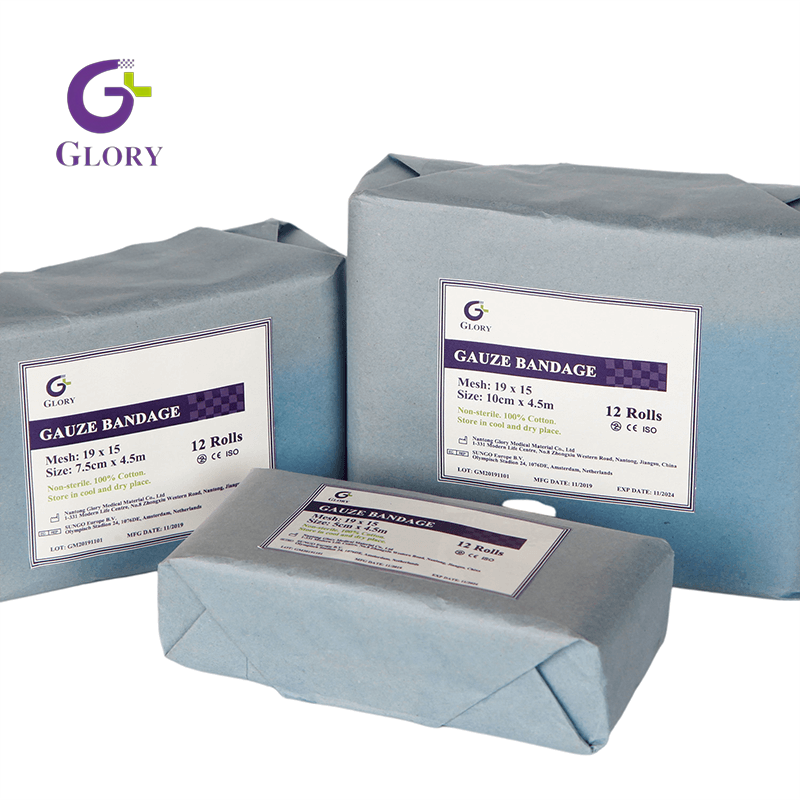
Categorizing Gauze: Woven vs. Non-Woven Materials
Understanding the manufacturing process of gauze is essential for matching the product to the clinical requirement. The primary distinction lies between woven cotton and non-woven synthetic blends. Each material interacts differently with wound exudate, granulating tissue, and secondary retention layers.
Woven Cotton Gauze
Woven gauze consists of natural cotton yarns woven into a loose, open grid pattern. This traditional format offers high breathability and remains highly cost-effective for bulk secondary wrapping. It is also the preferred material when mechanical debridement is clinically necessary, as the coarse weave effectively grips necrotic tissue. Woven cotton presents significant trade-offs. It carries a higher risk of linting, potentially leaving stray fibers in the wound bed that can trigger foreign body reactions. Woven cotton easily adheres to drying wounds and offers lower fluid retention under physical compression. The capillary action of woven cotton tends to draw fluid laterally, which can increase the risk of periwound maceration if the dressing is not changed promptly.
Non-Woven Synthetic Blends (Rayon/Polyester)
Non-woven variants are manufactured by pressing fibers together rather than weaving them. This process creates a highly uniform, soft gauze bandage texture. Typically composed of rayon and polyester blends, non-woven gauze delivers superior absorbency compared to traditional cotton. It significantly reduces linting risks and demonstrates much less adherence to fragile granulation tissue. Patients generally report higher comfort levels during dressing changes. The reduction in dressing change frequency often offsets the initial expense. Clinicians must note that non-woven materials exhibit a different tensile strength profile when fully saturated, requiring careful handling during removal from deep wound tracts.
Evaluation Parameter | Woven Cotton Gauze | Non-Woven Synthetic Gauze |
|---|---|---|
Material Composition | 100% Natural Cotton | Rayon/Polyester Blend |
Manufacturing Process | Interlocking yarns (grid pattern) | Pressed and bonded fibers |
Linting Risk | High (sheds short fibers) | Low (continuous bonded fibers) |
Absorbency Profile | Moderate (lateral wicking) | High (vertical wicking) |
Tissue Adherence | High (incorporates into scab) | Low (smooth surface contact) |
Tensile Strength (Dry) | High | Moderate |
Tensile Strength (Wet) | High | Lower (requires careful removal) |
Primary Clinical Use | Secondary wrapping, debridement | Primary contact, exudate management |
Form Factors: Selecting the Right Wound Dressing Bandage
Gauze is manufactured in several distinct form factors, each engineered for specific anatomical challenges and wound profiles. Selecting the correct physical shape and ply-count prevents application errors and ensures the dressing performs its intended mechanical function.
The Gauze Bandage Roll (Conforming vs. Standard)
Rolled gauze is indispensable for securing dressings on extremities. Conforming rolls feature a slight elasticity that allows them to stretch and mold around complex anatomical contours like elbows and knees. This flexibility accommodates joint movement without constricting blood flow. Standard, non-elastic rolls are frequently deployed to wrap emergency splint systems for suspected fractures or dislocations, providing rigid support and mild compression. When applying conforming rolls, you must maintain even tension to prevent the material from rolling down the limb and creating a tourniquet effect.
The Absorbent Gauze Roll and Packing Strips
Deep, tunneling, or undermining wounds require specialized packing. An absorbent gauze roll or narrow packing strip is inserted into the void to absorb fluid from the inside out. Tensile strength is the most critical parameter here. The material must remain structurally intact when saturated so that the entire strip can be removed in one piece. Retained fragments deep within a wound tract inevitably cause severe infections. Clinicians should leave a visible "tail" of the packing strip outside the wound to facilitate safe and complete extraction during the next dressing change.
Gauze Sponges and Pads
Flat gauze sponges and pads are categorized by their ply-count, typically ranging from 8-ply to 12-ply or higher. Ply-count directly correlates to exudate volume management and strike-through prevention. Higher ply-counts offer greater absorption capacity and mechanical padding, making them suitable for heavily draining surgical sites. Lower ply-counts work well for minor abrasions or as protective covers over intact skin. When stacking pads for heavy exudate, alternate the orientation of the weave to maximize the capillary trapping of fluids.
Impregnated Gauze Options
Modern wound care frequently transitions from dry gauze to specialized impregnated variants. These dressings are infused with compounds like petrolatum, iodoform, PHMB, or hydrogel. Petrolatum-impregnated gauze prevents tissue adherence and retains moisture, making it ideal for skin grafts and chest tube sites. Iodoform and PHMB variants provide localized antimicrobial prophylaxis, reducing bacterial bioburden in contaminated wounds. Hydrogel gauze actively donates moisture to dry, desiccated wound beds, facilitating autolytic debridement. You must match the active impregnating agent to the specific biological phase of the wound healing cascade.
Technical Selection Criteria for Medical Procurement
Procurement officers must balance clinical efficacy with inventory management. Establishing strict technical selection criteria ensures facilities stock the right materials without unnecessary expenditure. A rigorous evaluation process prevents the accumulation of obsolete or redundant supplies.
Sterility and Infection Control Compliance
Balancing inventory between sterile and non-sterile options is required for optimizing budgets. Sterile gauze is mandatory for direct contact with surgical sites, acute open wounds, and deep wound packing. Using non-sterile products in these scenarios violates basic infection control protocols. Non-sterile bulk gauze is perfectly adequate and highly cost-effective for secondary wrapping, protecting intact skin, or providing padding for orthopedic splinting support. Facilities should clearly segregate these inventories to prevent accidental cross-contamination by clinical staff.
Material Softness and Patient Compliance
Patient comfort directly impacts compliance with dressing protocols. Utilizing soft materials is particularly important for pediatric, geriatric, or palliative care patients. These demographics often suffer from friable, easily damaged skin. Soft, non-woven materials reduce friction shear during movement and minimize pain during dressing changes, thereby improving overall patient cooperation and clinical outcomes. Procurement teams should physically evaluate the texture of samples before committing to bulk contracts.
Tensile Strength and Linting Risks
Procurement teams must rigorously evaluate manufacturer specifications regarding fiber shedding. Retained fibers in a wound bed lead to granuloma formation and a prolonged inflammatory response, stalling the healing cascade. Tensile strength requirements must be met when rolled gauze is used under tension for limb immobilization or physical compression. A bandage that tears under moderate tension compromises both wound security and orthopedic stability. Request independent laboratory testing data on wet tensile strength from suppliers to verify performance claims.
Verify the ISO certification of the manufacturing facility to ensure consistent quality control.
Request linting test results (e.g., Gelbo Flex testing) to quantify particle shedding.
Evaluate the packaging integrity of sterile products to ensure they withstand standard hospital storage conditions.
Assess the ease of opening for sterile pouches to prevent contamination during aseptic presentation.
Implementation Risks and Protocol Mitigation
Even the highest quality gauze can cause complications if applied incorrectly. Facilities must implement standardized protocols to mitigate common application risks. Continuous staff education is necessary to maintain high standards of care.
Preventing Tissue Adherence
The most common risk associated with traditional gauze is adherence to the wound bed. When dry gauze sticks to healing tissue, removal causes severe trauma, pain, and bleeding. To mitigate this, clinical protocols must mandate pre-moistening adhered gauze with sterile saline prior to removal. Allow the saline to soak for several minutes to dissolve dried exudate. Alternatively, facilities should transition to using non-adherent silicone or petrolatum contact layers beneath the primary gauze dressing to eliminate adherence entirely.
Managing High-Exudate Wounds
Relying solely on standard gauze for heavy exudate rapidly leads to periwound maceration, where the surrounding healthy skin breaks down from continuous moisture exposure. Facilities must establish clear clinical thresholds. When a wound consistently soaks through standard gauze within a few hours, protocols should dictate a step up to superabsorbent polymers, calcium alginates, or negative pressure wound therapy. Applying barrier creams to the periwound skin provides an additional layer of defense against maceration.
Inventory Standardization vs. Specialized SKU Bloat
Hospitals frequently face the operational challenge of stocking dozens of minor gauze variations. This SKU bloat complicates ordering and confuses clinical staff. The recommended approach is a tiered inventory model based on facility acuity levels. Standardize on a few high-performing, versatile SKUs that cover both standard wound dressing and emergency orthotic securement, eliminating redundant products that offer no distinct clinical advantage. Conduct quarterly reviews of usage data to identify and phase out low-volume items.
Conclusion
The selection of a gauze bandage is a clinical decision that requires careful evaluation of material properties and patient needs. The right material, weave, and form factor directly impact healing velocity, infection rates, and overall operational efficiency. By treating gauze procurement as a technical clinical evaluation, facilities can significantly improve patient outcomes while controlling inventory costs. Procurement logic should base decisions on the facility's most common wound and trauma etiologies. Prioritize non-woven, low-linting options for primary wound contact, and reserve high-tensile, cost-effective woven rolls for secondary securing and orthopedic stabilization.
Audit current dressing change frequencies to identify areas where high-absorbency non-woven gauze could reduce labor and material usage.
Request manufacturer samples to conduct hands-on tensile strength and linting evaluations before committing to bulk purchases.
Update facility wound care protocols to explicitly define when to use sterile versus non-sterile gauze.
Establish clear clinical thresholds for transitioning from standard gauze to advanced exudate management dressings.
FAQ
Q: What is the difference between a woven and non-woven gauze bandage?
A: Woven gauze is made from natural cotton yarns woven into an open grid, offering breathability but a higher risk of linting. Non-woven gauze consists of synthetic fibers pressed together, providing superior absorbency, a softer texture, and significantly reduced linting risk.
Q: When should an absorbent gauze roll be used instead of flat pads?
A: An absorbent roll is ideal for continuous wrapping around extremities, securing primary dressings on difficult anatomical contours, providing mild compression, and packing deep, tunneling wounds where a continuous, high-tensile strip is required for safe removal.
Q: Can a gauze bandage roll be used for orthopedic injuries like fractures or dislocations?
A: Yes. In emergency trauma care, rolled gauze is frequently used to secure rigid splints, provide temporary joint immobilization, and manage associated soft tissue injuries while maintaining proper skeletal alignment before definitive casting.
Q: Can you put a dry gauze bandage directly on an open wound?
A: It is generally discouraged unless the wound is actively bleeding and requires immediate pressure. Dry gauze can adhere to the wound bed, causing trauma and pain upon removal, and it fails to maintain the moist environment necessary for optimal cellular repair.
Q: How often should a wound dressing bandage be changed?
A: Dressing changes should be dictated by clinical protocols and exudate levels rather than a static timeline. Change the bandage when exudate strikes through to the secondary layer, if the dressing becomes loose, or if there are signs of localized infection.
Q: What makes a soft gauze bandage better for geriatric patients?
A: Geriatric patients often have friable, paper-thin skin. A soft, non-woven gauze bandage reduces friction and shear forces during application and removal, significantly lowering the risk of secondary skin tears and improving patient comfort.
Q: Is all rolled gauze sterile?
A: No. Rolled gauze is available in both sterile and non-sterile formats. Sterile rolls are packaged individually for direct wound contact and packing, while non-sterile bulk rolls are used for secondary wrapping, external splinting, and intact skin protection.
