


What Makes a Wound Dressing Suitable for Clinical Use?
Views: 0 Author: Site Editor Publish Time: 2026-08-12 Origin: Site


Suboptimal wound management carries compounding clinical and financial costs that healthcare facilities can no longer ignore. Prolonged healing times, elevated infection rates, and excessive nursing labor directly impact patient outcomes and operational efficiency. Navigating a saturated medical supply market presents a significant challenge for clinical teams. They must constantly balance exudate management, infection control, patient comfort, and unit economics without compromising care quality.
Selecting the right materials requires moving beyond basic absorption metrics. Clinicians need a structured, evidence-based framework for evaluating clinical-grade wound care materials. This approach must focus heavily on material science, wound etiology, and operational scalability. By understanding how different substrates interact with the wound bed at a cellular level, healthcare providers can optimize healing trajectories and reduce the total cost of care.
Key Takeaways
Clinical suitability is defined by a dressing’s ability to maintain an optimal moisture balance, provide thermal insulation, manage edema, and prevent periwound trauma upon removal.
Traditional materials like sterile gauze swabs and laparotomy sponges remain essential for acute surgical settings, while advanced polymers are required for chronic exudate management.
Evaluating a foam wound dressing versus a hydrocolloid wound dressing requires analyzing the wound's depth, drainage level, anatomical location, and infection risk.
Dressing requirements are dynamic, requiring systematic transitions as a wound progresses through different physiological healing phases.
Total cost of care—factoring in wear time, dressing change frequency, and labor—must supersede base unit cost during procurement evaluation.
Defining Clinical Suitability: Core Success Criteria for Wound Dressings
Exudate Management and Moisture Balance
The physics of moisture vapor transmission rate (MVTR) dictates the success of modern wound management. A clinical-grade material must facilitate gaseous exchange while retaining sufficient moisture to support cellular migration. If the MVTR is too high, the wound bed risks desiccation, halting autolytic debridement and causing cell death. Conversely, an excessively low MVTR traps fluid, leading to periwound maceration and tissue breakdown. Striking this balance ensures the wound environment remains conducive to angiogenesis and granulation. We evaluate MVTR based on the specific exudate volume of the wound, adjusting our material selection as the wound progresses through different healing phases.
When managing highly exudative wounds, the material must actively pull fluid away from the wound bed. This vertical wicking prevents lateral spread, which is the primary cause of periwound maceration. We look for materials that lock fluid within their core structure, preventing it from being squeezed back onto the skin under compression or patient weight.
Infection Control and Barrier Integrity
Wound beds are highly susceptible to exogenous pathogens. Effective materials function as an impermeable barrier against bacteria and environmental contaminants while still allowing oxygen permeability. This semi-permeable nature prevents anaerobic bacterial colonization. The structural integrity of the barrier must withstand friction and tension, ensuring that the protective seal remains intact between scheduled changes, even in highly mobile anatomical regions.
In clinical practice, we often encounter situations where the barrier is compromised by shear forces. Selecting materials with robust adhesive borders or utilizing secondary fixation methods is necessary to maintain this barrier. We also consider the pore size of the outer layer, ensuring it is small enough to block bacterial entry but large enough to allow moisture vapor to escape.
Thermal Insulation and Dead Space Obliteration
Biological processes critical to wound healing, such as mitotic activity and leukocyte function, are highly temperature-dependent. Maintaining normothermia in the wound bed is a non-negotiable biological requirement. When a wound cools, cellular activity stalls, delaying the proliferative phase. Furthermore, materials must conform precisely to wound cavities. Obliterating dead space prevents the pooling of exudate, which can serve as a medium for bacterial growth, and stops premature surface closure over an unhealed tract.
We use specific packing techniques to ensure dead space is filled without causing tissue ischemia. Overpacking a cavity can exert excessive pressure on the wound walls, restricting blood flow and causing further necrosis. The material must be pliable enough to conform to irregular shapes while maintaining its structural integrity when saturated.
Compression Compatibility and Edema Reduction
In cases like venous leg ulcers, external compression therapy is the gold standard of care. A clinical dressing must function seamlessly under these compression systems. It must absorb and retain exudate under pressure without losing its structural integrity or causing pressure necrosis. Materials that collapse or leak under compression fail to minimize edema and can actively damage fragile surrounding tissue.
We evaluate materials based on their fluid retention capacity under specific pressure gradients, typically 40 mmHg for standard venous compression. The material must not become a hard, unyielding mass when saturated, as this can create localized pressure points under the compression wrap.
Non-Adherence and Atraumatic Removal
Protecting newly formed granulation tissue is paramount. Traditional materials often adhere to the wound bed as they dry, causing severe mechanical trauma and patient pain during removal. Modern clinical criteria demand non-adherent contact layers. These layers ensure atraumatic removal, preserving delicate epithelial cells and minimizing the psychological distress often associated with frequent dressing changes.
Silicone contact layers have become the standard for preventing adherence. They provide sufficient tack to hold the material in place during application but release easily without stripping the stratum corneum. We prioritize these materials for patients with fragile skin, such as the elderly or those receiving long-term corticosteroid therapy.
Evaluating Primary Dressing Categories and Materials
Traditional Passive Materials
Traditional woven and non-woven cotton materials serve foundational roles in acute care. The specific clinical indications for sterile gauze swabs include mechanical debridement, minor acute wounds, secondary absorption, and packing deep cavity lines. They offer immediate, cost-effective absorption for short-term applications. We frequently use them in the emergency department for initial wound cleansing and temporary coverage before definitive closure.
In the operating room, the intraoperative role of the laparotomy sponge is critical. These highly absorbent pads manage heavy acute bleeding, pack abdominal cavities, and maintain surgical site visibility during complex procedures. They are designed for maximum fluid uptake in a sterile field. We rely on their radiopaque threads to ensure accurate counts and prevent retained surgical items.
However, traditional materials carry technical limitations. They present a high adherence risk, lack active moisture retention capabilities, and carry a risk of fiber shedding into the wound bed. Consequently, they require frequent changes, which increases nursing labor and disrupts the healing environment. We limit their use to specific, short-term indications where their absorptive properties outweigh these drawbacks.
Foam Wound Dressings
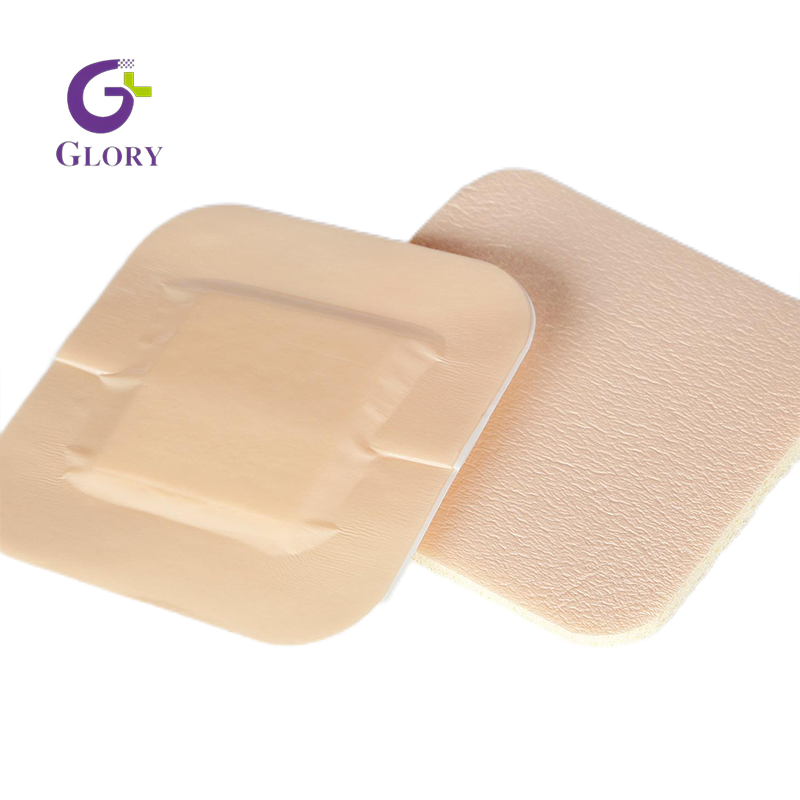
The polyurethane matrix structure of a foam wound dressing is engineered for high-capacity fluid management. Its open-cell structure facilitates vertical wicking, drawing exudate directly upward and locking it away from the wound edge to prevent lateral spread and maceration. We use these extensively for wounds that produce significant amounts of fluid, such as venous leg ulcers and heavily exuding pressure injuries.
Primary use cases include moderate to heavy exudative wounds, chronic ulcers, and pressure injury prophylaxis. Beyond absorption, these materials offer excellent thermal insulation properties and cushioning benefits for friction-prone anatomical sites like the sacrum and heels. They also maintain their absorptive capacity under compression therapy, making them highly versatile. We often select bordered versions with silicone adhesives to simplify application and ensure secure fixation.
Hydrocolloid Wound Dressings
The mechanism of a hydrocolloid wound dressing relies on gel-forming agents such as carboxymethylcellulose and gelatin. Upon contact with wound exudate, these agents swell to form a cohesive gel. This process retains moisture, promotes autolytic debridement, and creates a slightly acidic environment that is inherently hostile to bacterial growth. We find these particularly effective for breaking down dry eschar and slough without the need for sharp debridement.
These materials are indicated for low to moderate exudate levels, partial-thickness wounds, and uninfected necrotic tracts. However, clinicians must note absolute contraindications. They should never be applied to heavily draining, deeply tunneled, or actively infected wounds, as the occlusive nature can exacerbate anaerobic infections and cause severe maceration. We carefully assess the wound bed for signs of clinical infection before applying these materials.
Advanced Biologics and Antimicrobials
When standard moisture management is insufficient, advanced active materials become necessary. Substrates incorporating chitosan, hyaluronic acid, collagen, silver, and medical-grade silicones actively alter the wound biochemistry. Silver and iodine-impregnated options provide sustained antimicrobial release, while collagen matrices act as sacrificial substrates for matrix metalloproteinases (MMPs). These advanced options bridge material science and active wound healing, specifically targeting stalled, highly colonized, or high-risk chronic wounds that fail to progress through the standard healing cascade.
We deploy these materials strategically, often as a short-term intervention to jumpstart a stalled wound or manage localized bioburden. Once the wound bed improves, we transition back to standard moisture-retentive materials to complete the healing process.
The Decision Framework: Matching Dressings to Wound Etiology, Phase, and Location
Physiological Phase-Based Selection
Wound healing is a dynamic continuum. Clinical criteria require transitioning materials as the wound shifts through physiological phases. During the inflammatory phase, the wound produces high levels of exudate and requires maximum absorption and antibacterial defense. As the wound enters the proliferative and remodeling phases, exudate decreases. The focus must shift toward delicate tissue protection, maintaining a moist environment, and preventing hypergranulation.
We monitor the wound bed closely, adjusting our material selection based on the predominant tissue type and exudate volume. Failing to transition materials appropriately can stall healing and increase the risk of complications.
Anatomical Location and Depth Constraints
Wound geometry heavily dictates material selection. Deep cavities require specialized fillers like ribbon gauzes or alginate ropes to obliterate dead space without overpacking, which can cause ischemia. Highly contoured or high-friction joint areas demand flexible, bordered options that will not roll or detach during patient movement. Sacral or heel-specific shapes are engineered to accommodate these complex anatomical contours.
We consider the patient's mobility and the specific mechanical forces acting on the wound site. A material that performs well on a flat surface may fail completely on a highly mobile joint.
Acute and Surgical Wounds
Surgical incision lines and acute trauma require sterile, highly absorbent, and protective barriers that support primary intention healing. The primary goal is to secure the incision, absorb immediate postoperative bleeding, and provide a barrier against nosocomial pathogens. Materials used here must be easily removable to allow for routine surgical site inspections without disrupting sutures or staples.
We prioritize materials with transparent windows or non-adherent contact layers for surgical sites, allowing for visual inspection without compromising the sterile barrier.
Chronic and Stalled Wounds
Addressing venous leg ulcers and diabetic foot ulcers requires a long-term management strategy. The focus shifts to sustained compression compatibility, heavy exudate handling, and managing underlying bioburden. Materials must manage highly corrosive chronic exudate, which contains elevated levels of proteases that can degrade healthy periwound tissue if left unchecked.
We utilize superabsorbent polymers and active antimicrobial materials to manage these complex wounds, often in conjunction with offloading devices or compression therapy.
Pressure Injuries
Selecting prophylactic and therapeutic materials for pressure injuries relies on shear reduction, pressure redistribution, and microclimate management. Multi-layered silicone borders are often utilized to reduce friction between the patient and the support surface while simultaneously managing local heat and moisture buildup that weakens skin integrity.
We implement these materials as part of a comprehensive pressure injury prevention protocol, combining them with regular repositioning and specialized support surfaces.
Wound Type / Phase | Primary Clinical Goal | Recommended Material Category |
|---|---|---|
Acute Surgical Incision | Infection barrier, absorb initial bleeding | Traditional passive materials, post-op borders |
Heavy Exudate / Venous Ulcer | Vertical wicking, compression compatibility | Polyurethane foams, superabsorbents |
Low Exudate / Necrotic Tract | Moisture retention, autolytic debridement | Hydrocolloids, hydrogels |
Deep Cavity / Undermining | Dead space obliteration, exudate management | Alginate ropes, cavity foams |
Operational Trade-Offs: Cost, Scalability, and Compliance
Unit Cost vs. Total Cost of Care
Procurement teams often face the financial trade-off between cheaper passive materials and advanced alternatives. While traditional options have a lower base unit cost, they require multiple daily changes. This drives up nursing labor costs, increases clinical waste, and raises the risk of cross-contamination. Advanced materials offer extended wear times of three to seven days. Evaluating the total cost of care—factoring in labor, wear time, and complication rates—consistently demonstrates that advanced materials yield better economic and clinical outcomes.
We analyze the frequency of dressing changes and the associated nursing time to determine the true cost of a wound care protocol. Investing in materials that require fewer changes often results in significant overall savings.
Formulary Standardization
Clinical inventory bloat complicates supply chain logistics and confuses frontline staff. Facilities must implement strategies for formulary standardization. By selecting versatile, multi-indication materials that cover the majority of standard wound presentations, hospitals can streamline procurement. However, this standardization must not compromise highly specialized critical care needs, ensuring that specific active therapies remain available for complex cases.
We work closely with procurement teams to identify core materials that meet the needs of most patients, reducing the number of SKUs managed by the facility.
Regulatory Compliance and Quality Standards
Manufacturing consistency is critical for clinical safety. Procurement must verify necessary certifications, including ISO standards, FDA clearance, and CE marks. These regulatory benchmarks validate rigorous biocompatibility testing, strict sterility parameters, and consistent performance metrics. Non-compliant materials pose severe liability risks and threaten patient safety through potential toxicity or structural failure.
We require comprehensive documentation from manufacturers to ensure all materials meet our stringent quality standards before they are added to the formulary.
Implementation Risks and Clinical Mitigation Strategies
Preventing Periwound Maceration
Maceration occurs when excess fluid degrades intact skin surrounding the wound. To mitigate this, clinicians must select materials with superior vertical wicking properties that lock fluid away from the margins. Additionally, utilizing liquid barrier films or cyanoacrylate protectants on the periwound skin provides a secondary defense against corrosive exudate, preserving skin integrity even under heavy drainage conditions.
We routinely apply barrier films to the periwound skin before applying any material to highly exudative wounds, creating a physical barrier against moisture damage.
Managing Sensitization and Allergic Reactions
Medical adhesive-related skin injury (MARSI) and contact dermatitis complicate wound management. Facilities must audit product materials for common allergens, such as specific chemical adhesives, colophony, and latex. Transitioning to soft silicone-based contact layers significantly reduces the risk of allergic reactions and mechanical skin stripping, particularly in geriatric or pediatric populations with fragile epidermises.
We monitor patients closely for signs of erythema or blistering around the wound site, switching to hypoallergenic materials at the first sign of a reaction.
Addressing Dressing Roll-off and Adhesion Failure
High-friction anatomical sites frequently experience adhesion failure, exposing the wound to contaminants. Mitigation tactics include using secondary securing methods like tubular bandages or cohesive wraps. Applying skin prep-wipes enhances adhesive tack without damaging the skin. Selecting appropriate border shapes designed specifically for joints or the sacrum also distributes tension evenly, preventing edge roll-off during patient repositioning.
We train staff on proper application techniques, ensuring the skin is clean and dry before application and utilizing appropriate secondary fixation methods when necessary.
Cleanse the wound bed thoroughly with sterile saline or an appropriate wound cleanser.
Assess the periwound skin and apply a liquid barrier film if necessary.
Select the appropriate material based on exudate volume and wound geometry.
Apply the material smoothly, avoiding wrinkles or tension on the skin.
Secure the material with secondary fixation if required by the anatomical location.
Conclusion
Conduct a comprehensive audit of your facility's primary case mix to identify the most frequent wound etiologies and prioritize material categories accordingly.
Implement a standardized evaluation protocol that measures total cost of care, including nursing labor and wear time, rather than relying solely on base unit pricing.
Request independent MVTR and absorption data from manufacturers to verify performance claims before updating the clinical formulary.
Initiate a controlled pilot evaluation with frontline nursing staff to assess ease of use, adhesion quality, and patient comfort in real-world scenarios.
FAQ
Q: What is the clinical difference between a foam wound dressing and a hydrocolloid wound dressing?
A: Foams are highly absorbent, utilizing a polyurethane matrix for vertical wicking in moderate to heavy exudating wounds. Hydrocolloids contain gel-forming agents that retain moisture for low-exudate wounds, promoting autolytic debridement. Foams manage excess fluid, while hydrocolloids maintain a moist environment for drier wounds.
Q: When should sterile gauze swabs be utilized instead of advanced moisture-retentive dressings?
A: They are best utilized for short-term acute needs, such as mechanical debridement, absorbing immediate postoperative bleeding, or acting as a secondary absorbent layer over primary active therapies. They are not recommended for long-term moisture retention.
Q: How does the physiological phase of wound healing affect the selection of clinical dressings?
A: The inflammatory phase requires high absorption and antimicrobial properties to manage heavy exudate and bioburden. The proliferative phase requires moisture retention and delicate tissue protection to support granulation and epithelialization without causing mechanical trauma.
Q: Can foam wound dressings be used safely under compression wraps for venous leg ulcers?
A: Yes, high-quality polyurethane foams are designed to maintain their structural integrity and absorptive capacity under external compression. They manage exudate effectively without collapsing, which helps minimize edema and prevents pressure necrosis.
Q: What makes a laparotomy sponge suitable for intraoperative use compared to standard surgical gauze?
A: They are significantly larger, highly radiopaque for safety tracking, and engineered for massive fluid uptake. This makes them ideal for packing abdominal cavities, managing acute hemorrhage, and maintaining clear visibility in the surgical field.
