


When Is a Skin Stapler Faster Than Sutures
Views: 0 Author: Site Editor Publish Time: 2026-11-25 Origin: Site


Every passing second in the operating room carries immense weight. Surgeons must secure incisions swiftly and safely. Finding the optimal closure method remains a persistent clinical challenge. Sluggish techniques extend anesthesia time and elevate patient risks. This guide dives deep into the practical realities of surgical closure. We explore the definitive scenarios where a mechanical Skin Stapler outperforms traditional suturing.
Key Takeaways
Speed Advantage: Mechanical closure devices drastically slash operating room time compared to manual suturing. This streamlines surgical schedules while minimizing patient exposure to anesthetics.
Clinical Idealism: Stapling instruments are overwhelmingly preferred during procedures involving extensive incisions. Orthopedic joint replacements and high-volume trauma environments demand this immediate intervention.
Cosmetic Considerations: Mechanical staples demand careful evaluation regarding the final aesthetic result despite being undeniably faster. Highly visible areas still necessitate meticulous buried subcuticular suturing.
Efficiency vs. Precision: Selecting the appropriate closure tool hinges entirely on the anatomical site. The acute urgency of the medical procedure and the clinical mandate for minimal tissue trauma dictate the choice.
Ease of Use: Mechanical devices deliver a uniform closure force across the wound edge. This consistency simplifies training protocols. However, the subsequent extraction process requires specific medical tools and strict patient compliance.
The Need for Speed: Why Closure Velocity Matters
The duration of an operation serves as a critical metric within modern surgical practice. It directly influences patient recovery trajectories. Rather than a mere convenience for the medical team, Wound Closure Speed acts as a fundamental pillar of risk management. When a procedure extends beyond its anticipated timeframe, the physiological toll on the human body compounds exponentially.
Analyzing the fallout of prolonged surgical duration reveals stark objective realities. Extended exposure of internal tissues to the ambient operating room environment correlates heavily with an increased incidence of surgical site infections. Furthermore, prolonged anesthesia carries inherent systemic risks. Geriatric patients and those battling complex comorbidities face the highest danger. By accelerating the final stages of an operation, surgeons effectively mitigate these anesthesia-induced complications. This proactive approach paves the way for a smoother awakening.
Specifically, minimizing time on the table yields profound ergonomic and cognitive dividends for the medical staff. Complex interventions often stretch into hours. Multi-level spinal fusions or extensive abdominal resections inevitably induce profound surgeon fatigue. Reaching the closure phase and deploying a rapid mechanical device preserves the surgeon's waning focus. It also significantly curtails the likelihood of accidental needle-stick injuries compared to executing tedious manual stitches.
Clinical Variable | Impact of Prolonged Surgery | Benefit of Rapid Closure |
|---|---|---|
Anesthesia Exposure | Increased risk of postoperative nausea, cognitive dysfunction, and respiratory depression. | Reduces total anesthetic load, facilitating faster postoperative awakening and recovery. |
Infection Risk | Extended tissue exposure increases the probability of pathogen colonization. | Minimizes the window of vulnerability, supporting better sterile field management. |
Surgeon Fatigue | Decreased fine motor precision and increased risk of accidental sharps injuries. | Alleviates physical strain, allowing for a safer and more efficient conclusion to the procedure. |
Operating Room Costs | Higher per-minute utilization costs for the facility and staff. | Optimizes hospital resources, allowing for higher daily surgical throughput. |
When to Choose a Mechanical Device: Ideal Clinical Scenarios
Traditional sutures definitely retain their status as a versatile tool. However, specific clinical scenarios demand a different approach. Mechanical stapling demonstrates absolute superiority in both function and sheer efficiency under high-tension conditions. The decision to deploy staples is primarily governed by wound tension, incision length, and immediate trauma urgency.
High-tension wounds present a notoriously frustrating challenge for manual sutures. Standard thread can occasionally slice through delicate epidermal layers across anatomical regions subjected to aggressive movement. The knee or hip following a total arthroplasty exemplifies this intense post-operative swelling. In contrast, medical-grade staples distribute this kinetic tension evenly across the incision line. Their rigid box-like structure offers robust architectural support. This ensures wound edges stay securely approximated even as the patient begins early physical therapy mobilization.
In addition, lengthy incisions serve as a primary indication for mechanical stapling. Procedures involving thoracic cavities, extensive laparotomies, or emergency Cesarean sections often result in massive incisions. Attempting to close these expansive wounds with interrupted sutures devours valuable operating room time. A stapler empowers the surgeon to bridge a long incision in a fraction of that time. It guarantees uniform spacing and consistent tissue eversion from end to end.
Trauma and critical care settings similarly demand aggressive hemostasis. Stabilizing crashing vital signs takes absolute precedence over meticulous cosmetic alignment when treating polytrauma patients. The rapid-fire application of staples enables trauma surgeons to secure massive lacerations instantly. This arrests blood loss so the team can pivot toward internal hemorrhaging. This efficiency shines brightest in the Emergency Theater, where workflow optimization becomes a life-saving necessity.
Technical Comparison: Mechanics and Tissue Interaction
Clinicians must scrutinize application mechanics to objectively evaluate these two distinct closure methodologies. The tactile click-and-fire efficiency of a mechanical stapler stands as its most defining technical triumph. Triggering the device drives a rectangular metal staple into the dermis while simultaneously bending the legs inward. This precise mechanical action intentionally everts the skin edges. Eversion remains a non-negotiable principle in wound healing that prevents the epidermis from curling inward. It jumpstarts optimal cellular bridging.
Conversely, manual suturing is inherently characterized by its time-intensive nature. The technique demands precise needle driving, constant tension management, and secure knot tying. Suturing grants the operator unparalleled granular control over tissue alignment. Yet, it remains undeniably slower and vulnerable to late-shift fatigue.
Another pivotal point of comparison lies in the localized tissue reaction. Suture threads can provoke a foreign body inflammatory response as the immune system attempts to degrade the material. Metal staples typically bypass this localized inflammation because they are highly biocompatible and inert. Nevertheless, they carry a heightened risk of leaving small punctate scars where the metal legs pierced the skin. This occurs if applied with excessive downward force or abandoned in the tissue for too long.
Feature | Mechanical Stapler | Manual Sutures |
|---|---|---|
Application Speed | Extremely fast; multiple staples applied per minute. | Slower; requires individual needle passes and knot tying. |
Tissue Eversion | Automatic and consistent with proper device placement. | Highly operator-dependent; requires meticulous technique. |
Tissue Reaction | Low reactivity using inert metals; minimal inflammatory response. | Variable; depends heavily on suture material construction. |
Sharps Safety | High; the sharp points are contained within the device housing. | Lower; continuous handling of exposed needles increases risk. |
Industry Perspectives: The Shift Toward Automated Closure
The surgical closure market is undergoing a profound transformation driven by workflow optimization. Recent industry analyses and search trends reveal a surging global demand for automated closure devices. Hospitals face unprecedented healthcare staffing shortages. Consequently, administrators heavily scrutinize operating room turnover rates. Every minute saved during wound closure translates directly to increased surgical capacity and reduced overhead costs.
Furthermore, contemporary clinical guidelines push manufacturers to innovate beyond simple speed. The latest iterations of mechanical staplers feature ergonomic refinements. Engineers design these tools to reduce the downward pressure required for deployment. This critical upgrade minimizes localized tissue ischemia. The industry consensus is clear: speed remains paramount, but the next generation of closure tools must also bridge the gap between rapid application and superior aesthetic results.
Actionable Selection Guide: Matching Specs to Scenarios
Selecting the right device goes beyond personal preference. It requires matching specific product parameters to the anatomical site. Modern staplers utilize 316L medical-grade stainless steel to offer exceptional tensile strength. Clinicians typically choose between standard and wide staple dimensions based on tissue thickness.
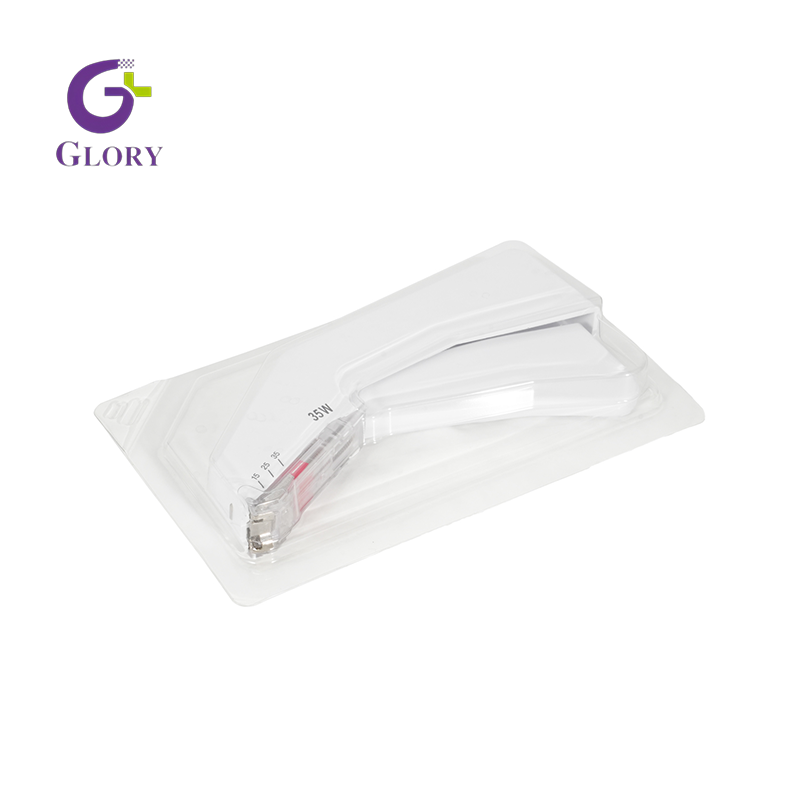
A standard staple configuration, designated as 35R, often measures around 5.7 millimeters in crown width and 3.9 millimeters in leg length. This specification works perfectly for routine closures on thinner skin. Conversely, a wide staple variant, designated as 35W, measures approximately 6.5 millimeters in width by 4.1 millimeters in leg length. The 35W provides superior bridging for high-tension areas like the abdomen or orthopedic joints. Devices pre-loaded with 35 staples ensure uninterrupted closure for lengthy incisions. Understanding these precise specifications allows procurement teams and surgeons to align their tools with actual clinical demands.
Understanding Scar Outcome: The Aesthetic Trade-off
A persistent myth circulating within patient communities suggests that staples inherently guarantee severe scarring. The reality of a final Scar Outcome is far more nuanced from a rigorous clinical perspective. The ultimate appearance of a healed incision is dictated less by the raw closure material itself. It depends heavily on the surgeon's deployment technique and the patient's genetic predisposition to keloids.
Proper eversion of the skin edges reigns supreme in achieving a favorable cosmetic result. When a stapler is hovered correctly and fired, it perfectly aligns the dermal layers. This paves the way for a flat and narrow scar line. However, pressing the device too aggressively against the skin triggers localized ischemia, meaning restricted blood flow. This restriction can lead to minor tissue necrosis and the dreaded railroad track scarring historically associated with staples.
Strict anatomical guidelines dictate where staples should be avoided due to this delicate aesthetic trade-off. High-visibility zones like the face and anterior neck represent absolute contraindications for mechanical stapling. Plastic and general surgeons pivot to fine-gauge monofilament sutures within these cosmetically sensitive regions. Staples are strategically reserved for territories where structural security and speed outweigh cosmetic perfection.
Post-Operative Care: The Reality of Staple Extraction
The rapid application of staples is universally celebrated inside the operating room. However, the complete patient journey extends far beyond the surgical table. The post-operative phase demands meticulous management to safeguard optimal healing. The inevitable Staple Removal represents a pivotal milestone in the recovery experience. Rigid metal staples require a secondary physical clinical intervention for extraction.
This extraction process cannot be improvised. It mandates the use of a specialized sterile staple extractor. Engineers design this tool to slide seamlessly beneath the visible crossbar of the staple. Squeezing the extractor handles crimps the staple in the center. This forces the embedded metal legs to flare outward and glide smoothly out of the tissue. Attempting to pry staples free with standard forceps is strictly contraindicated. It inflicts unnecessary pain and severely spikes the risk of wound dehiscence.
Clear patient instructions prove critical during the vulnerable healing phase. Discharged patients must keep the incision site clean and dry. They must vigilantly monitor for classic signs of infection such as spreading erythema or purulent discharge. The precise timeline for removal fluctuates based on the anatomical location and the inherent tension on the skin. It typically falls within a 7 to 14-day window.
Conclusion
Selecting the optimal wound closure method requires a calculated assessment of specific patient needs and surgical circumstances. A mechanical stapler delivers unmatched speed and structural integrity during high-tension emergencies. It proves indispensable in busy trauma centers and extensive orthopedic procedures. Clinicians must carefully weigh this rapid efficiency against potential cosmetic outcomes. By mastering application techniques and proper removal protocols, surgical teams maximize operational throughput while safeguarding patient safety. To integrate these advanced closure technologies into your facility, evaluate your specific incision requirements and discover perfectly matched professional devices at https://www.glorymedic.com to ensure the best possible surgical outcomes.
FAQ
How much faster is stapling compared to suturing?
Mechanical stapling significantly outpaces manual suturing in clinical settings. A proficient surgeon can place a staple in less than a second. Closing a 10-centimeter incision with a stapler might take one to two minutes. Suturing that same length with interrupted stitches often requires ten to fifteen minutes. This massive time reduction minimizes anesthesia exposure and optimizes operating room turnover.
Can patients shower with surgical staples in place?
Patients can usually shower lightly 48 to 72 hours after surgery, provided the surgeon gives explicit approval. The incision site should not be submerged in bathtubs or swimming pools. Water should gently run over the staples without direct high-pressure scrubbing. After showering, the area must be patted completely dry with a clean towel to prevent moisture buildup and reduce infection risks.
Is it painful to have staples removed compared to stitches?
Most patients describe the sensation of staple extraction as a series of quick mild pinches rather than acute pain. The specialized extractor tool bends the staple prongs outward before lifting, allowing the metal to slide out smoothly. Removing staples is actually considered faster and less uncomfortable than removing interrupted non-absorbable stitches in many clinical settings. The comfort level heavily depends on whether the tissue has become swollen.
Can I use a skin stapler on the face?
Healthcare professionals strongly discourage the use of mechanical staples on the face or neck. The skin in these anatomical regions is delicate and highly visible. Achieving the best possible cosmetic result remains the highest priority for facial lacerations. Surgeons prefer to use fine-gauge monofilament sutures and meticulous buried techniques for these areas.
How soon should staples be removed?
The removal timeline is strictly dictated by the anatomical location of the wound and the tension on the skin edges. Leaving staples in too long can negatively impact the final appearance of the scar. Removing them too early risks wound separation. Staples on the scalp are generally removed in 7 to 10 days. Staples over major joints might require 14 to 21 days to ensure adequate structural support during dynamic movement.
Does the skin stapler increase the risk of infection?
Clinical studies indicate that infection rates associated with surgical staples are comparable to traditional sutures. Metal staples are made of inert materials like 316L stainless steel that do not harbor bacteria. Unlike braided multifilament sutures, staples lack the ability to wick moisture and pathogens into the wound tract. Minimizing infection risk still requires strict adherence to sterile application techniques and diligent post-operative hygiene.
