


How Do You Choose The Right Gauze Roll?
Views: 0 Author: Site Editor Publish Time: 2026-06-20 Origin: Site


Treating a simple medical dressing as a generic commodity often leads to poor clinical outcomes. Care providers face patient discomfort and increased supply chain waste when they ignore specific material differences. Too often, buyers choose the cheapest option available. Inappropriate dressing selection risks severe complications like wound maceration, lint contamination, and restricted circulation. These preventable issues delay healing and cause unnecessary pain during dressing changes.
Conversely, applying a protocol-driven approach prevents tissue trauma and actively supports faster recovery. This guide explores the complete evaluation framework required to match a wound care dressing to specific healing stages. You will learn how to properly balance differing exudate levels and strict operational requirements. We also detail practical steps and material differences to help you confidently secure the ideal fit for your medical facility.
Key Takeaways
Selecting a gauze roll requires balancing absorbency needs (exudate management) with structural demands (securement and conformability).
The primary decision matrix hinges on woven vs. non-woven materials, sterile vs. non-sterile applications, and stretch/conforming capabilities.
Misaligning the gauze type with the wound healing stage increases the risk of tissue adherence and delayed recovery.
Evaluating supplier compliance, ply consistency, and latex-free certifications is critical for safe, scalable procurement.
Framing the Decision: Why Picking the Right Medical Gauze Roll is Crucial
Many facilities underestimate the hidden costs of poor dressing selection. When you choose the wrong material, you invite a cascade of clinical and operational problems. Frequent dressing changes drain nursing time and consume excess inventory. Poorly manufactured options often shed fibers into the wound bed. This linting compromises granulating tissue and triggers inflammatory responses. Furthermore, patients experience significant physical trauma when providers remove dressings adhered to sensitive, newly formed skin.
To avoid these setbacks, you must define clear success criteria for every application. A successful application relies on several core pillars. First, you need a secure fit. The wrapping must hold the primary dressing in place without constricting blood flow. Second, you must maintain an optimal moisture balance. The material should absorb excess fluid while preventing the wound bed from drying out. Finally, you need structural integrity. The wrapping must withstand patient movement without fraying or rolling down the limb.
Before diving into material choices, we must clarify a baseline assumption regarding standard wound care practices. Medical staff often confuse pads and rolls, yet they serve entirely different functions. You typically use pads as primary dressings. They sit directly on the wound for localized absorption. Conversely, you primarily use a Medical Gauze Roll as a secondary dressing. Caregivers rely on it to secure primary pads, wrap extremities, or pack deep, tunneling wounds.
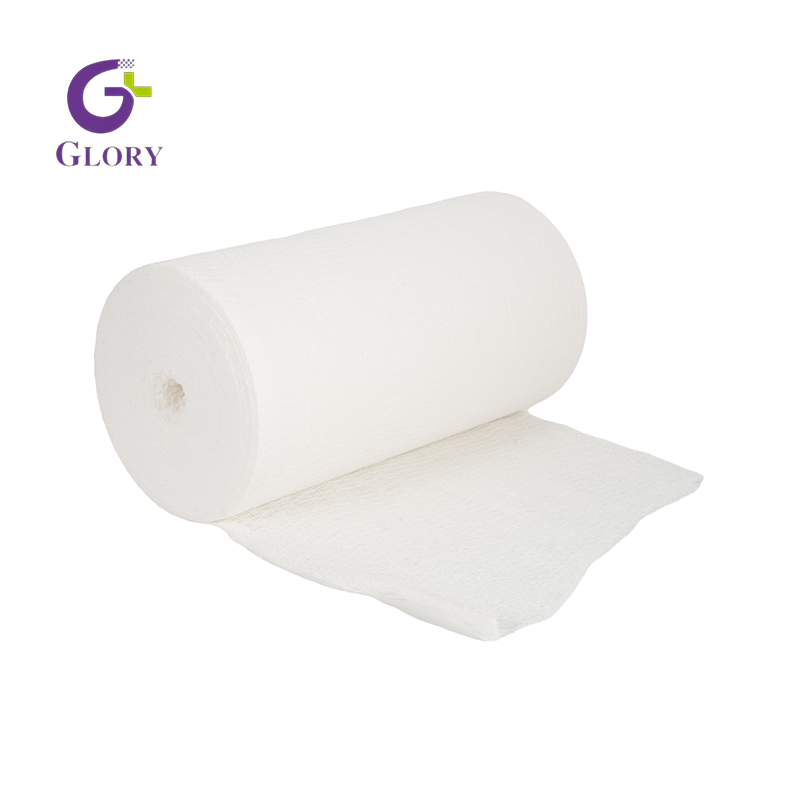
Solution Categories: Woven, Non-Woven, and Conforming Profiles
Wound care requires precise material matching. You cannot use a single product for every patient scenario. The industry categorizes these products into three main profiles. Each profile addresses specific mechanical and biological needs.
Woven Gauze Rolls (100% Cotton)
Manufacturers create woven options using 100% cotton yarn. They weave the threads into a loose, open grid. This traditional structure makes the product highly porous and breathable. You will find this material best suited for mechanical debridement. The coarse texture grips dead tissue effectively. It also excels at packing heavily exuding wounds and providing traditional secondary wrapping over bulky primary dressings.
However, woven cotton carries inherent risks. The open weave creates a higher likelihood of linting. Cut edges easily shed fibers, leaving debris in the wound bed. Additionally, cotton dries out quickly. If you do not moisten it appropriately before removal, it easily adheres to delicate granulating tissue. This adherence causes bleeding and delays healing.
Non-Woven Gauze Rolls (Synthetic Blends)
Unlike traditional weaving, manufacturers press fibers together to create non-woven options. They typically blend rayon and polyester. This process yields a tighter, more uniform structure. Non-woven materials feel significantly softer against the skin. You should choose this option for sensitive wound beds and prolonged skin contact. They provide superior and rapid absorbency, pulling moisture away from the site faster than cotton.
The main risk involves securement. Because the synthetic surface feels smoother, it offers slightly less structural friction. When wrapping a limb, the layers might slide against each other more easily compared to standard cotton. You often need stronger medical tape to secure the ends.
Conforming (Stretch) Gauze Rolls
Conforming options incorporate high elasticity into their design. They stretch smoothly and cling to themselves. This mild cohesiveness allows the material to hug complex body contours securely. You will find them ideal for joint movement areas like knees and elbows. They accommodate swelling, making them perfect for edema management. Furthermore, they secure primary dressings efficiently without requiring excessive amounts of medical tape.
To summarize these material differences, review the comparison table below.
Material Profile | Composition | Best Clinical Use | Primary Risk / Limitation |
|---|---|---|---|
Woven | 100% Cotton | Debridement, deep packing | Linting, tissue adherence |
Non-Woven | Rayon/Polyester Blend | Sensitive skin, high absorbency | Lower friction for wrapping |
Conforming | Elastic Blends | Joints, swelling, securement | Can constrict if pulled too tight |
Core Evaluation Framework: Matching Features to Patient Outcomes
Selecting the ideal Gauze Roll requires a structured evaluation framework. You must assess the specific needs of the patient and the wound environment. Let us break down the crucial evaluation criteria into three distinct areas.
Assessing Sterility Requirements
You must determine the necessary sterility level before opening any package. Misunderstanding this requirement leads to severe site infections. Sterile products undergo rigorous decontamination processes. You must mandate sterile applications for any primary wound contact. Surgical sites, deep lacerations, and infection-prone wounds require absolute sterility. Never compromise on this rule.
Non-sterile products serve a different purpose. They offer a highly cost-effective solution for secondary securement. You can safely use non-sterile wrapping over an intact primary dressing. They also work perfectly for stabilizing joints over unbroken skin. Using sterile wraps for these secondary tasks wastes valuable budget resources.
Ply Count and Absorbency (Exudate Management)
Ply refers to the thickness or the number of layers folded into the product. You must carefully evaluate how ply correlates with the wound’s exudate phase. Highly weeping wounds demand thicker, multi-ply options. These thicker materials absorb massive amounts of fluid, protecting the surrounding skin from maceration. Dry, granulating wounds need thinner, low-ply coverage to maintain slight moisture.
You must manage a vital trade-off here. Higher ply dramatically increases absorption capacity. However, it significantly reduces breathability. Thick layers trap localized heat over the wound. Elevated temperatures encourage bacterial colonization. Therefore, only use high-ply layers when exudate volumes justify the trapped heat.
Best Practices for Exudate Management:
Assess the daily fluid volume produced by the wound.
Match high-weeping stages with 6-ply or 8-ply non-woven synthetics.
Step down to 2-ply or 4-ply breathable cotton once granulation begins.
Monitor the surrounding intact skin for white, wrinkled edges (maceration).
Biocompatibility & Patient Sensitivities
Patient safety goes beyond infection control. You must consider biocompatibility. Confirming latex-free materials remains an absolute necessity. Latex allergies trigger severe, sometimes fatal, anaphylactic reactions. Always verify the packaging explicitly states "latex-free."
Furthermore, consider hypoallergenic properties. Pediatric patients, geriatric individuals, and oncology patients possess highly compromised skin barriers. Traditional coarse cotton can cause micro-tears on fragile skin. In these scenarios, transition immediately to soft, synthetic non-woven blends.
Implementation Risks and Procurement Considerations
Clinical efficacy only solves half the problem. Supply chain directors face intense pressure to balance safety with scalable procurement. If you do not manage implementation risks carefully, your facility will face inventory chaos.
Inventory Standardization vs. Specialization
Facilities constantly struggle with catalog bloat. Stocking too many niche SKUs creates logistical nightmares. Nurses spend too much time searching supply closets for specific brands. Items expire on the shelves. You must balance the need for specialization against inventory standardization.
The most effective strategy involves finding a versatile, multi-purpose product. A high-quality conforming stretch wrap often satisfies 80% of daily clinical needs. Keep this versatile option highly stocked. Then, reserve a small, strictly controlled inventory of highly specialized woven options for specific debridement protocols.
Supplier Trust & Compliance Verification
Never take a supplier's marketing claims at face value. You must rigorously evaluate manufacturers before signing purchase agreements. Medical materials require strict oversight. Look for documented FDA registration. More importantly, demand proof of ISO 13485 certification. This international standard proves the manufacturer maintains a comprehensive quality management system specifically for medical devices.
Common Mistakes in Procurement:
Failing to test batch-to-batch consistency before ordering in bulk.
Ignoring tensile strength variations, which causes wrapping to snap during application.
Accepting generic "certifications" without verifying the issuing regulatory body.
Overlooking ply consistency, leading to unpredictable absorbency rates on the floor.
Making the Final Selection: Next Steps for Your Facility
Now that you understand the material science and procurement hurdles, you need a localized action plan. Bridging the gap between theory and daily practice requires systematic decision-making.
Shortlisting Logic
Create a standardized decision tree for your nursing staff. When staff members follow a visual guide, dressing failure rates drop significantly. We have provided a simple shortlisting logic chart below. You can adopt this framework directly into your supply room protocols.
Clinical Use Case | Recommended Selection | Rationale |
|---|---|---|
Wrapping limbs & joints | Conforming (Stretch) Roll | Accommodates movement and swelling safely. |
Packing deep, necrotic wounds | Woven Sterile Cotton | Provides mechanical friction for debridement. |
Securing primary pads on fragile skin | Non-Woven Synthetic Blends | Delivers superior softness and prevents micro-tears. |
Secondary wrap over intact skin | Non-Sterile Bulk Rolls | Provides safe stabilization without wasting sterile budget. |
Trialing Assumptions
Do not commit to a massive bulk purchase blindly. Request sample batches from your shortlisted suppliers. Distribute these samples to your wound care team. Ask them to test the tear resistance under typical clinical friction. Have them stretch the material to check its memory. Does it return to shape, or does it stay permanently deformed? Finally, test the linting factor by rubbing the material vigorously against a dark surface. If it leaves a snowstorm of fibers, reject the supplier.
Actionable Next Step
Prompt your clinical lead to audit the current supply closet today. Compare your facility's recent clinical failure rates against the material profiles currently in use. Are you seeing an uptick in maceration? You might be using a high-ply wrap on a dry wound. Are dressings falling off patients during physical therapy? Your current wraps likely lack elastic memory. Identify these gaps immediately.
Conclusion
Choosing the correct wrapping material represents a calculated clinical and operational decision. It is never just an administrative checklist. Your choices directly impact patient comfort, healing velocity, and nursing efficiency. Treating these supplies as interchangeable commodities guarantees poor clinical outcomes.
Always verify your selection aligns with the specific biological environment of the wound. Match linting risks, stretch capacity, and ply thickness to the patient's immediate mechanical needs. Protect fragile skin with non-woven synthetics, and manage necrotic tissue with traditional woven cotton.
We encourage you to consult your medical supply expert immediately. Review your facility's specific product specifications to ensure they match your active wound care protocols. Upgrading your selection framework today will prevent costly complications tomorrow.
FAQ
Q: Can you use a non-sterile gauze roll directly on an open wound?
A: No. You must never place non-sterile materials directly onto an open wound. Doing so introduces bacteria and drastically increases the risk of severe site infections. Non-sterile options exist strictly for secondary securement. You only use them over an intact primary dressing or against unbroken skin.
Q: What is the difference between an elastic bandage and a conforming gauze roll?
A: The difference lies in active compression versus passive securement. Elastic bandages (like ACE wraps) apply active, heavy pressure to treat sprains and restrict swelling. Conforming rolls stretch to hold dressings in place securely. They accommodate movement but provide minimal to no active therapeutic compression.
Q: Do medical gauze rolls expire?
A: While the cotton or synthetic fibers do not technically expire, the packaging does. Sterility degrades over time. Exposure to light, moisture, and temperature fluctuations breaks down the sterile barrier. You must strictly follow the manufacturer's printed shelf-life guidelines to guarantee patient safety.
Q: How tight should a gauze roll be applied?
A: You must avoid the tourniquet effect. Applying it too tightly restricts blood circulation, causing severe tissue damage. Always use the "two-finger" rule. You should comfortably slip two fingers beneath the wrapped layers. This ensures safe circulation while maintaining adequate structural securement.
