


How Tight Should An Elastic Bandage Be?
Views: 0 Author: Site Editor Publish Time: 2026-06-23 Origin: Site


Dealing with an active sprain or sudden swelling requires immediate action. You likely want fast relief and proper support. Wrapping an injured joint might seem straightforward at first glance. However, an improperly applied wrap often does more harm than good. It can severely impede vital blood circulation. Alternatively, it might fail to provide necessary support if applied too loosely. We must remember a fundamental medical principle. Compression effectively manages localized swelling. It does not magically cure underlying structural injuries. The standard medical consensus offers a clear bottom line. Your wrap should feel firm and supportive. It must never restrict blood flow or cause active, throbbing pain. Finding this delicate balance accelerates your recovery. It also prevents dangerous complications like tissue ischemia. Let us explore exactly how to achieve the perfect fit safely and effectively.
Key Takeaways
Optimal Tension: Aim for a "snug but comfortable" fit, utilizing a 50% overlap and 50% stretch technique during application.
The Capillary Refill Test: A reliable, instant method to verify safe blood circulation after wrapping.
Red Flags: Numbness, tingling, discoloration, or throbbing indicate the wrap is dangerously tight and requires immediate removal.
Hardware Matters: Selecting the correct width and closure type (velcro vs. metal clips) determines consistent tension and prevents dangerous slippage.
The Golden Rule of Tension: Defining Success for an Elastic Bandage
The primary goal of a Compression Elastic Bandage is localized swelling reduction. Clinicians call this edema control. It also provides mild proprioceptive feedback. This feedback constantly reminds your brain to consciously protect the injured joint during movement. It is crucial to understand its core limitations. These wraps are definitely not designed for total immobilization. They purposefully allow a safe, restricted range of motion to prevent joint stiffness and minor muscle atrophy during the early healing phases.
To achieve optimal tension, rely entirely on the proven 50/50 application standard. This technique guarantees consistent pressure across the entire injury site.
The 50 Percent Overlap: First, overlap each layer of the bandage by exactly half of its width as you move up the limb. This creates a uniform pressure gradient. It prevents thin gaps where swelling can easily escape and bulge.
The 50 Percent Stretch: Second, stretch the material to approximately 50 percent of its maximum elasticity as you wrap. Pulling it tighter risks cutting off arterial circulation entirely. Leaving it looser fails to adequately compress the injured tissue.
Directional tension matters immensely for physiological reasons. Always wrap from the furthest point of the extremity toward the core of your body. Medical professionals call this moving from distal to proximal. For example, if you injure your ankle, start wrapping near your toes and move upward toward your calf muscle. This specific upward direction actively encourages natural lymphatic drainage. It efficiently pushes excess fluid back into central circulation and prevents dangerous fluid pooling in your lower extremities.
3 Objective Tests to Evaluate Compression Elastic Bandage Fit
You should never guess when assessing tension. Human perception of tightness often skews during the stressful moments following an acute injury. Instead, use objective evaluation dimensions to verify the wrap immediately after application. Instructors in certified first aid courses rely heavily on these clinical-standard tests. They guarantee basic safety and cardiovascular effectiveness.
The Capillary Refill Test (Pinch Test): This instantly evaluates your arterial blood flow. Pinch the nail bed of the wrapped limb firmly until the tissue turns completely white. Release the pressure immediately. Normal pink color should return to the nail bed within two seconds. If the color refill is noticeably delayed, the wrap is undoubtedly too tight. You must loosen it immediately to restore healthy oxygen delivery.
The Two-Finger Rule: You should be able to carefully slide two fingers comfortably beneath the top or bottom edge of the wrap. They should fit snugly against your skin without causing localized pain. If you cannot fit them at all, the baseline tension is excessive. If it requires forceful pushing to insert your fingers, loosen the wrap to prevent friction injuries.
The Temperature Check: Your wrapped limb should continuously maintain the exact same skin temperature as your healthy, uninjured limb. A noticeable temperature drop serves as a major warning sign. Cold extremities clearly indicate severe arterial restriction. Touch both sides of your body simultaneously using the back of your hand to compare temperatures accurately.
Implementation Risks: Red Flags Your Bandage Is Too Tight
Risk mitigation forms a critical part of home injury management. Over-compression presents severe physiological dangers users frequently underestimate. Prolonged excessive pressure causes ischemia, which is a dangerous and painful restriction of blood supply. It can also lead to severe peripheral nerve compression, especially around bony prominences like the knee or ankle. We must maintain a skeptical, evidence-based approach when assessing our comfort levels.
Certain symptoms demand immediate, non-negotiable action. If you experience any of the following triggers, remove the wrap instantly. Do not wait for these symptoms to simply improve on their own.
Symptom Category | Warning Signs & Immediate Removal Triggers | Underlying Clinical Cause |
|---|---|---|
Neurological Signs | Tingling ("pins and needles") or sudden numbness in fingers or toes. | Direct nerve compression or severe lack of oxygenated blood reaching nerve endings. |
Vascular Signs | Skin turning pale, taking on a bluish tint (cyanosis), or feeling unusually cold to the touch. | Arterial flow restriction or severe venous pooling blocking fresh blood delivery. |
Pain Signals | A new, deep throbbing pain feeling distinctly different from the original acute injury ache. | Severe localized tissue pressure and trapped swelling building up beneath the material. |
Troubleshooting tension requires ongoing, active attention. Swelling naturally fluctuates throughout the day based on your hydration, activity level, and body position. You might apply an Elastic Bandage perfectly in the early morning. However, it may easily become dangerously tight by the late afternoon. Gravity and light physical activity often increase localized edema. Therefore, frequent re-evaluation is absolutely necessary. Unwind and completely reapply the material whenever minor discomfort arises.
The R.I.C.E. Framework: Where the Elastic Bandage Fits In
Compression never works in a clinical vacuum. A holistic approach consistently yields the best long-term healing outcomes. You must deliberately integrate wrapping into the broader R.I.C.E. clinical framework. This universally recognized acronym stands for Rest, Ice, Compression, and Elevation. Each individual component relies heavily on the others for maximum physiological efficacy.
Rest and ice act as mandatory vital prerequisites. Resting the injured limb prevents further microscopic tissue tearing. It halts the immediate mechanical damage. Applying ice directly before wrapping helps establish a much lower baseline level of swelling. Cold therapy causes rapid vasoconstriction, which physically narrows the blood vessels. This narrowing slows excess fluid leakage into the surrounding soft tissues. Please note a crucial, non-negotiable safety rule. Never wrap ice directly against bare skin tightly. Always place a dedicated cloth barrier between the ice pack and your body to prevent severe frostbite.
Elevation synergy dramatically amplifies your results. A properly applied Compression Elastic Bandage works best when combined with the simple force of gravity. You must actively keep the wrapped limb elevated above your heart level whenever resting. Use firm pillows to prop up a sprained ankle or knee while lying down. This elevated position physically drains excess lymphatic fluid away from the congested injury site. It maximizes the overall efficacy of the localized compression you applied.
Shortlisting the Right Elastic Bandage for Your Specific Injury
Initial product evaluation heavily dictates your overall success. Selecting the wrong solution will constantly frustrate your recovery efforts. An improper or ill-fitting wrap fundamentally fails to hold consistent tension. This mechanical failure leads to annoying, continuous re-wrapping throughout the day. It also creates uneven pressure zones potentially worsening your swelling.
You must size the product accurately according to your specific anatomy. Width selection changes drastically based on the size of the injured joint. Use a narrow 2-inch or 3-inch width for smaller extremities. These dimensions are perfectly ideal for stabilizing wrists, hands, and ankles. Conversely, larger muscular joints absolutely require a 4-inch or 6-inch width. Knees, large thighs, and broad shoulders need wider coverage to distribute pressure evenly. Narrow wraps applied to large joints frequently cause edge-rolling. This aggressive rolling creates a dangerous, localized tourniquet effect quickly cutting off vital circulation.
Let us evaluate the most common closure types available on the market today:
Hook-and-Loop (Velcro): This modern style offers extremely high reliability. It is endlessly micro-adjustable across the entire fabric surface. It carries zero risk of accidental skin puncture. Medical professionals largely consider it the best option for maintaining consistent, repeatable tension.
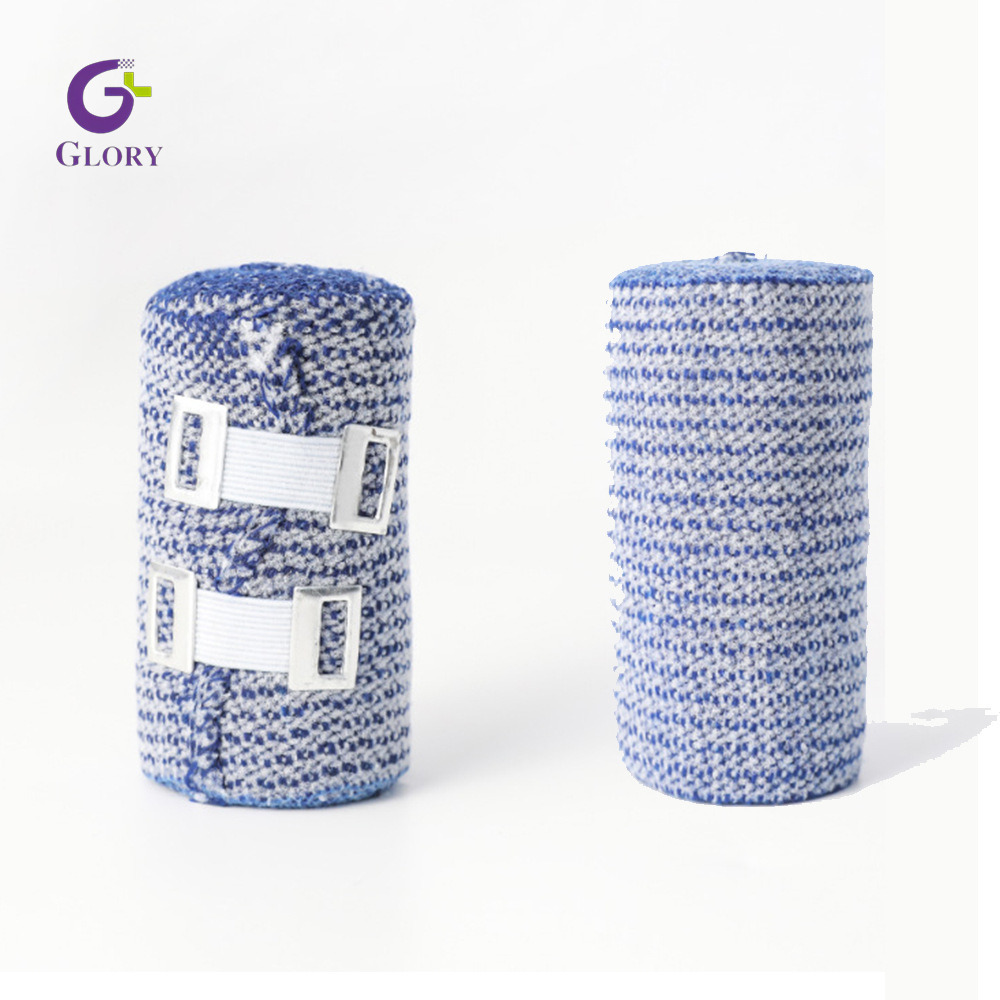
Metal Clips: These older fasteners are highly prone to sudden detachment during normal physical movement. They frequently get lost in bedding or clothing. Furthermore, they pose a much higher risk of creating painful, localized pressure points pressing deeply into swollen skin.
Material durability ultimately dictates long-term performance and safety. Frequent washing naturally degrades internal elasticity over time. A worn-out, stretched wrap requires severe over-stretching to achieve even basic compression. This dangerous over-stretching completely alters your manual tension control. Discard wraps immediately once they lose their original, snappy recoil.
Conclusion
Managing an Elastic Bandage remains a highly active, ongoing process. It requires diligence and attention. You must constantly wrap, test, and adjust the fit based entirely on your body's real-time feedback. It is never a passive procedure. Take immediate action if symptoms worsen or change unexpectedly. Remove the wrap and consult a certified medical professional if pain escalates sharply. Seek professional diagnostic care if swelling completely persists beyond 48 hours without improvement. You should also see a doctor immediately if you strongly suspect severe structural instability, like a torn ligament or hairline fracture. Finally, actively audit your medical supplies and replace old, degraded products. Fresh, high-quality materials guarantee safe, predictable compression for your entire recovery journey.
FAQ
Q: How long should I leave a compression elastic bandage on?
A: Remove it at least twice a day to carefully check your skin condition and allow unobstructed blood flow. Do not leave it on continuously for days without specific medical direction. Frequent short breaks prevent severe tissue damage and allow you to accurately monitor the underlying swelling progression.
Q: Should I sleep with an elastic bandage on?
A: Generally, no. Sleeping completely prevents you from noticing critical warning signs like numbness, tingling, or restricted blood flow. If a medical doctor mandates overnight wear for your specific injury, it must be wrapped significantly looser than your standard daytime wear to guarantee safety.
Q: Can an elastic bandage act as a brace?
A: No. They solely provide superficial compression to manage acute swelling. They do not offer substantial structural or ligamentous support. If your injury requires firm joint stabilization to prevent unwanted movement, you must transition to a rigid or semi-rigid medical brace designed for that purpose.
Q: How do I clean my bandage without ruining the elasticity?
A: Hand wash it gently in lukewarm water using mild soap. Never twist or wring the material out, as this destroys the internal elastic fibers. Instead, lay it perfectly flat on a clean towel to air dry. Heat from a standard machine dryer will melt and ruin the elastic elements permanently.
